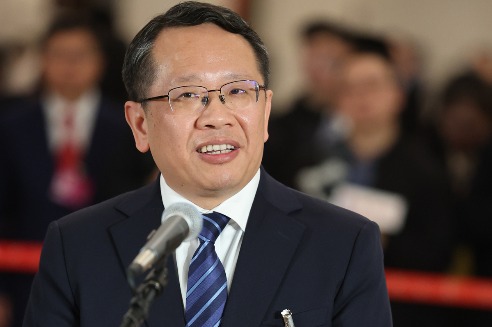
Artificial intelligence is fundamentally reshaping the educational landscape, accelerating the transition from traditional standardized teaching models toward customized learning experiences tailored to individual student needs. This transformative shift was highlighted by Xu Kun, President of Beijing University of Posts and Telecommunications and member of the National Committee of the Chinese People’s Political Consultative Conference, during the recent parliamentary sessions.
Speaking at the fourth session of the 14th National People’s Congress, Professor Xu emphasized that AI technology has effectively ‘pressed the fast-forward button’ on educational innovation. Unlike conventional classroom settings where uniform teaching schedules often fail to address individual learning differences, AI-powered systems can monitor student progress in real-time and dynamically adjust both learning pathways and content delivery.
Beijing University of Posts and Telecommunications has developed an intelligent tutoring platform that exemplifies this educational revolution. Rather than simply providing answers to difficult problems, the system employs sophisticated algorithms to guide students through complex concepts based on their cognitive levels, mirroring the approach of experienced educators who foster independent problem-solving skills.
The integration of AI also redefines the educator’s role, liberating teachers from repetitive administrative tasks and enabling them to focus on the essential aspects of mentoring and student development. However, Professor Xu cautioned that AI represents a ‘double-edged sword’ in education, emphasizing the critical importance of maintaining ethical standards and preventing over-reliance that could lead to intellectual complacency.
Looking toward the future, Xu envisions AI creating an open, integrated educational ecosystem that blends virtual and physical learning environments, driven by data analytics and enhanced through human-machine collaboration. This infrastructure will facilitate the distribution of high-quality educational resources across geographical and temporal boundaries, ultimately empowering comprehensive student development in the emerging AI era.