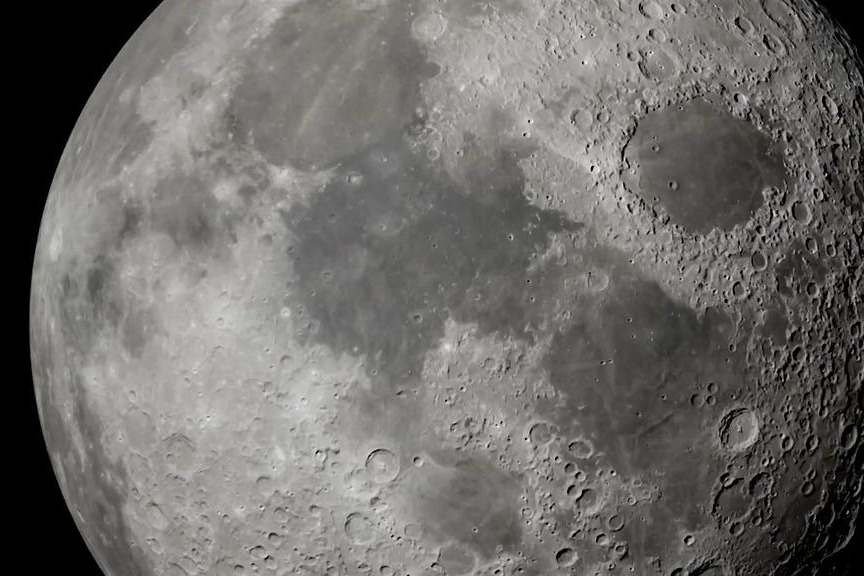
Chinese researchers have achieved a groundbreaking advancement in planetary science by creating the first high-resolution global chemical atlas of the Moon incorporating critical ground truth data from its far side. This scientific milestone, led by the Shanghai Institute of Technical Physics of the Chinese Academy of Sciences, addresses a long-standing gap in lunar geological understanding.
The research team developed an innovative intelligent inversion framework utilizing residual convolutional neural networks, combining Chang’e-6 mission samples with high-resolution multispectral orbital imagery. This sophisticated approach enabled the generation of unprecedented high-precision global maps detailing the distribution of major elemental oxides across the lunar surface.
Previous lunar chemical mapping efforts relied exclusively on near side calibration data, creating significant uncertainties in geological models, particularly within the scientifically crucial South Pole-Aitken basin. The incorporation of far side ground truth information has now successfully constrained the composition and extent of previously uncharacterized lunar terrains.
The refined chemical maps reveal a substantially higher proportion of magnesian anorthosite in the far side highlands compared to the near side hemisphere. This quantitative evidence provides compelling support for the theory of asymmetric crystallization and differentiation within the lunar magma ocean during the Moon’s early formation.
This research represents a transformative development in lunar science, offering new insights into crust-mantle structure, hemispherical evolutionary differences, and the formation mechanisms of the Solar System’s largest impact basin. The high-precision geochemical data will inform future landing site selection, resource exploration strategies, and mission planning for lunar exploration programs worldwide.
The Chang’e-6 mission, which launched on May 3, 2024, and returned with 1,935.3 grams of far side samples on June 25, 2024, provided the essential ground truth data that made this scientific breakthrough possible. The findings were published in the prestigious journal Nature Sensors.