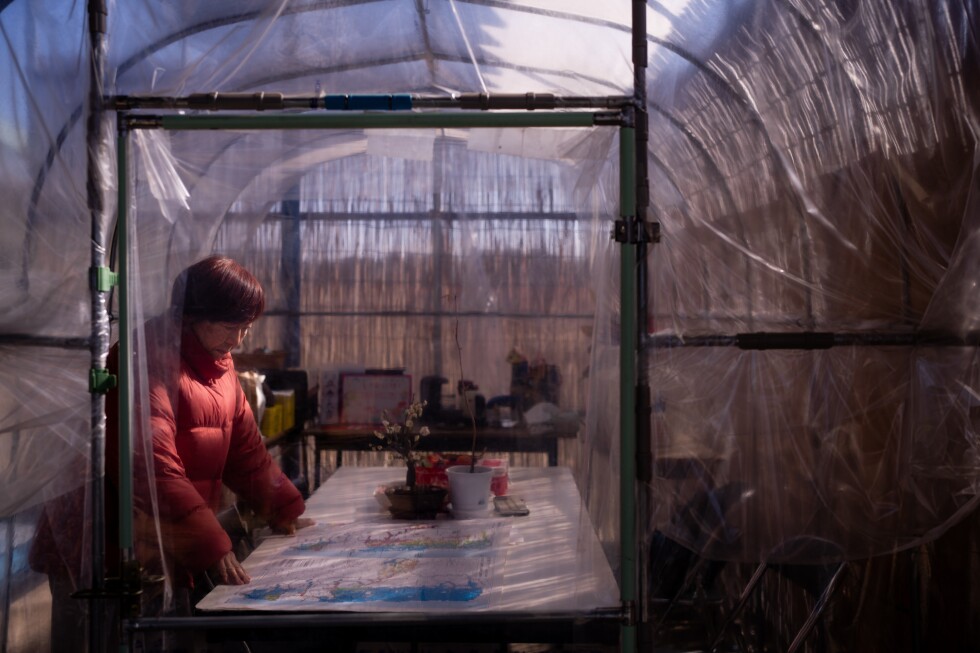
Fifteen years after the catastrophic Fukushima nuclear disaster, a dedicated network of citizen scientists continues to monitor radiation levels in the affected regions, challenging official narratives of complete safety. Tomoko Kobayashi, who operates the family-run Futabaya Ryokan inn in the nearly deserted town of Odaka, has transformed her personal tragedy into a lifelong mission of radiation documentation and education.
Kobayashi’s journey began when she returned to her hometown in 2012, conducting independent radiation surveys before reopening her inn in 2016. She now collaborates with fellow monitors who gather twice annually for intensive two-week measurement campaigns across hundreds of locations. Their color-coded radiation maps adorn the walls of her establishment, serving as both scientific record and memorial to the pre-disaster community that once thrived in this northeastern Fukushima region.
The March 11, 2011 disaster unfolded when a magnitude 9.0 earthquake triggered a tsunami that overwhelmed the Fukushima Daiichi nuclear plant’s cooling systems, causing three reactor meltdowns. The subsequent hydrogen explosions released radioactive particles that forced hundreds of thousands to evacuate, with some areas remaining uninhabitable to this day.
Despite government assurances of safety, Kobayashi’s team maintains a testing laboratory where they examine local produce and environmental samples. Their work reveals ongoing contamination challenges, with recent tests showing wild boar meat measuring 100 times above safety limits. Yukio Shirahige, a 76-year-old former plant worker who now assists the monitoring project, acknowledges that while radiation levels have significantly decreased, he remains cautious about declaring the area completely safe.
Meanwhile, at the Fukushima Daiichi facility itself, decommissioning efforts continue using advanced robotics and remote-controlled technology. Plant officials have successfully collected minute melted fuel samples and deployed micro-drones to examine reactor interiors—technologies unimaginable at the time of the disaster. However, the process remains extraordinarily complex, with at least 880 tons of highly radioactive fuel debris still requiring removal, a task experts believe may take decades.
As Japan reverses its nuclear phase-out policy in favor of reactor restarts, these citizen scientists face increasing pressure to silence their findings. Yet they persist in their mission, documenting radiation levels, testing local products, and maintaining a folk museum that preserves the disaster’s memory through art and photography—ensuring that both the physical and cultural aftermath of Fukushima’s nuclear crisis remains visible to future generations.