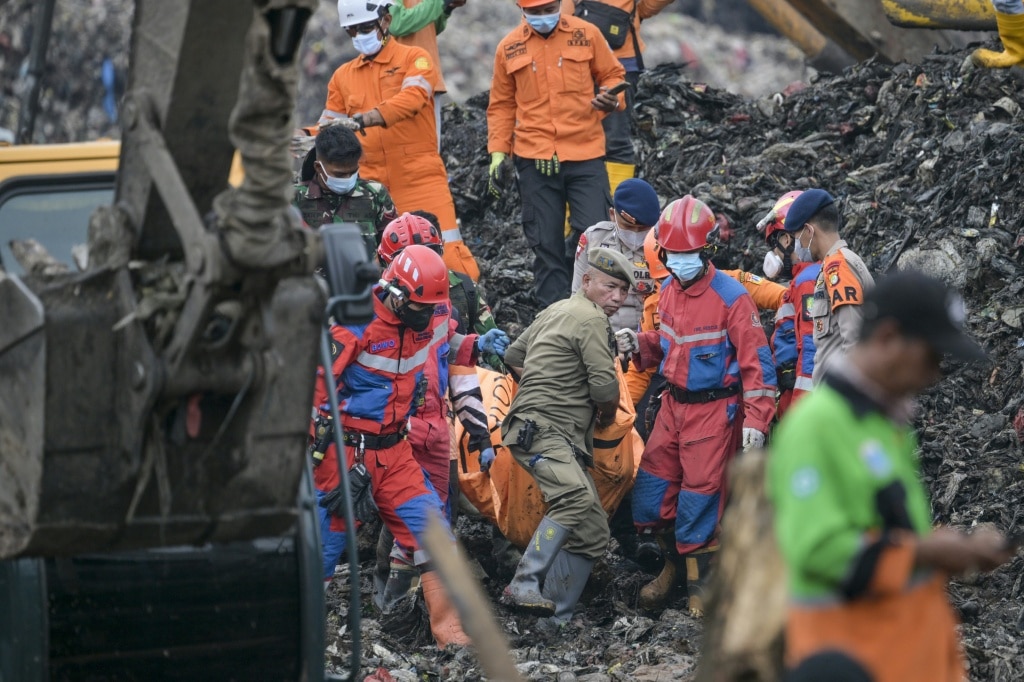
Indonesian search and rescue teams have terminated operations following a catastrophic landslide at the nation’s largest open-air landfill, which resulted in seven fatalities. The incident occurred Sunday afternoon at the Bantargebang waste site, located merely 25 kilometers from Jakarta, after prolonged heavy rainfall triggered the collapse that buried multiple trucks and food stalls beneath tons of debris.
Desiana Kartika Bahari, head of Jakarta’s search and rescue agency, confirmed the recovery of three bodies on Sunday and four additional victims on Monday. Six individuals were successfully rescued alive during the intensive operation that employed backhoes, canine units, and thermal drone technology to locate casualties. Authorities have verified that all missing persons have been accounted for.
The National Disaster Mitigation Agency (BNPB) has initiated weather modification procedures to mitigate further rainfall intensity. This sophisticated technique involves dispersing sodium chloride particles via helicopter to induce premature precipitation over ocean areas rather than populated regions.
The Bantargebang facility, spanning over 110 hectares and containing approximately 55 million tonnes of waste, represents one of the planet’s largest open landfills. The Jakarta metropolitan area and its satellite cities (collectively known as Jabodetabek), housing about 42 million residents, generate an estimated 14,000 tonnes of daily waste.
President Prabowo Subianto recently warned that most Indonesian landfills would exceed capacity by 2028 as the nation phases out such facilities. The government has committed $3.5 billion to develop 34 waste-to-energy plants within two years, converting garbage into electricity through incineration processes.
This tragedy echoes a 2005 landfill disaster in West Java that claimed 143 lives when methane gas explosions combined with heavy rains caused catastrophic collapse.