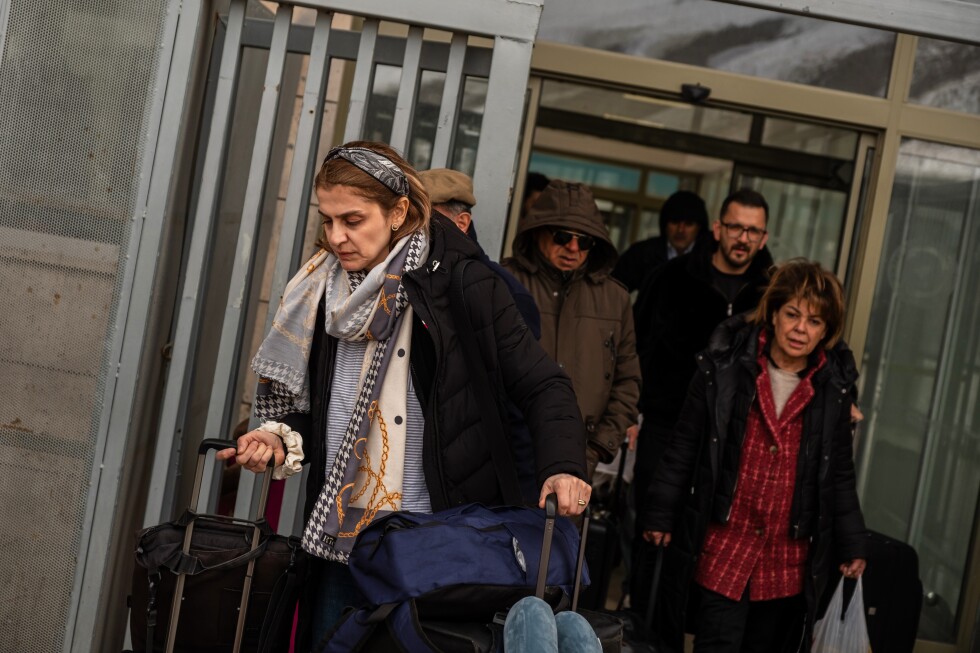
KAPIKOY BORDER CROSSING, Turkey — As Iran’s airspace remains shuttered following recent military strikes by U.S. and Israeli forces, the land border crossing near Turkey’s Van province has emerged as a vital lifeline connecting Iranians to the global community. The Kapikoy border gate, nestled within mountainous terrain, has witnessed a steady flow of travelers with existing connections to Turkey through employment, family ties, or dual citizenship arrangements.
Contrary to expectations of mass exodus, border activity reveals a more nuanced reality. Most travelers are accelerating prearranged visits rather than abandoning their homeland permanently. Reza Gol, a 38-year-old plastic surgeon traveling from Urmia to Istanbul for medical consultations, exemplified this trend: ‘It’s not clear whether we will leave Iran for good, but I can clear my head a little bit in the meantime. Everyone is staying in their houses—people are not running away.’
The journey remains fraught with complications. Pooneh Asghari and her Iranian-Canadian husband face reluctant relocation to Canada despite having established lives in Iran. ‘All our life is there,’ Asghari lamented, hoping for a brief absence. Economic constraints prevent widespread departure, as noted by Fariba (identifying partially for security): ‘People are very poor now. So they are staying at home, and they are scared.’
Border logistics have become increasingly complex. While Turkey initially suspended day-trip crossings, regular transit has resumed for Iranians and third-country nationals. Official figures indicate balanced movement, with 2,032 entries versus 1,966 departures recorded recently. Travelers typically proceed to Van airport for connecting flights, though weather disruptions and cancellations create additional hurdles.
Mehregan, a 26-year-old student stranded en route to China, described her ordeal: ‘If I can’t get on a flight tomorrow from here I will miss my flight to China’—potentially losing nonrefundable tickets. The regional economy suffers concurrently, with hotels and shops anticipating significant losses during normally bustling Nowruz holidays.
Turkey maintains preparedness for potential refugee influx, having constructed 380 kilometers of concrete walls and numerous surveillance towers along its Iranian border. Interior Minister Mustafa Ciftci confirmed contingency plans involving tent camps and buffer zones, though significant refugee movements have not yet materialized.
Harrison Mirtar, a 53-year-old Iranian-Canadian returning from parental visits in Tehran, expressed resentment toward foreign intervention but contextualized the crisis: ‘They are in their homeland. Life is going on, but with some bombs.’ This sentiment captures the resilient pragmatism characterizing most Iranians’ response to the escalating conflict.