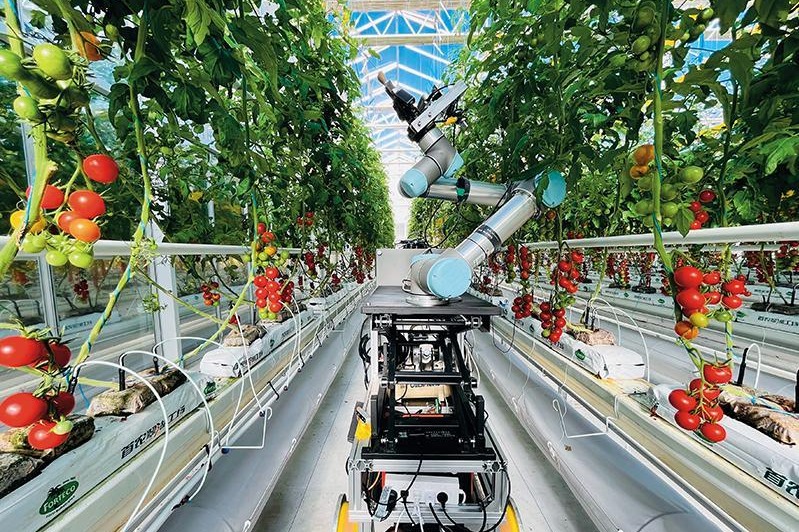
A pioneering agricultural development model pioneered by China is poised for international scaling as national legislator Zhang Fusuo proposes its formal integration into the country’s foreign assistance programs. The Science and Technology Backyard initiative, which dispatches graduate students and researchers to provide hands-on technical assistance to farmers, has demonstrated remarkable success domestically with 5,700 installations established across China since 2009.
The innovative program, which connects academic institutions directly with agricultural communities, has already expanded tentatively to ten countries including Malawi and Kenya through 14 international backyards established since 2019. These pilot projects have contributed significantly to food security in numerous villages across the Global South.
Professor Zhang, an NPC deputy and academician at the Chinese Academy of Engineering, emphasizes that the program’s next developmental phase requires systematic incorporation into China’s national foreign aid framework. This institutionalization would address critical challenges including reliance on research funding and the absence of stable financial channels for international operations.
The current model faces limitations in private sector and non-governmental organization participation, hindering a comprehensive approach that integrates education, technology and industry. Zhang proposes creating standardized operational procedures and dedicated funding streams while offering financial incentives for domestic agricultural companies to partner with overseas backyards.
The Global Science and Technology Backyard Center in Hainan Province serves as a strategic hub, attracting both Chinese and international agricultural enterprises to establish operations. Researchers in Sanya are transforming high-quality agricultural practices into replicable business models suitable for international expansion, particularly in tropical regions resembling Hainan’s climate.
Complementing technological transfer, the initiative emphasizes human capital development through expanded scholarship programs for Global South students and a innovative ‘1+1+1’ model combining study in China, practical experience in home countries, and further training in China. A dual-mentor system pairing Chinese and local experts ensures effective adaptation of technology to local languages, cultures, and policies.
This approach represents an evolution from traditional aid models, shifting from direct implementation toward guidance and capacity building that empowers local communities to sustain agricultural development independently.