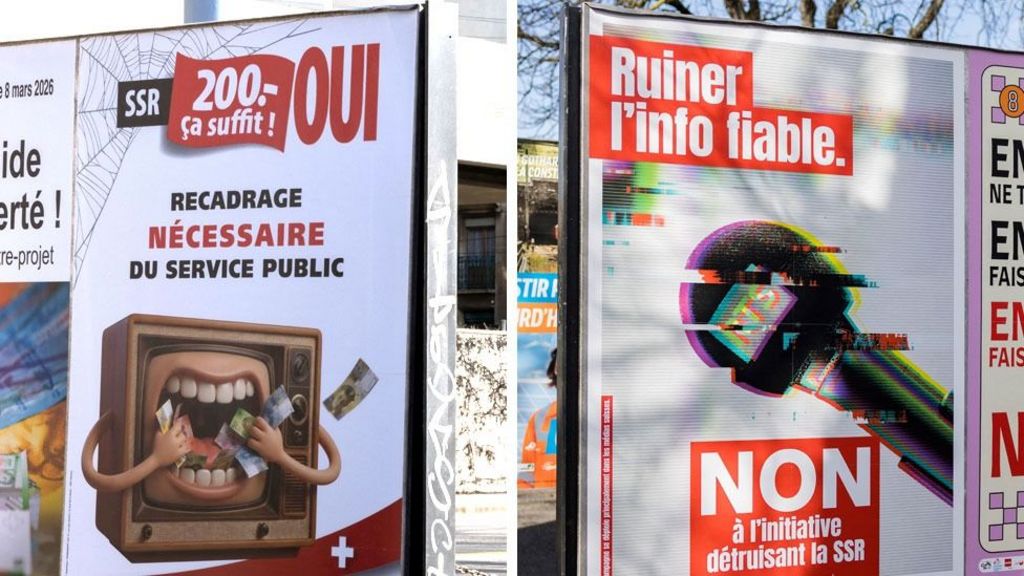
Switzerland faces a pivotal moment in its media landscape as citizens head to the polls this weekend to determine the funding future of their national broadcaster. The referendum centers on a proposal to slash the annual license fee for Swiss Broadcasting Corporation (SBC) from 335 Swiss francs (£320; $435) to 200 francs (£190; $260) per household, while completely exempting businesses from the charge.
The initiative, championed by the right-wing Swiss People’s Party, argues that the current fee represents an unjustified financial burden during a cost-of-living crisis. Party parliamentarian Manfred Bühler contends that modern production technologies enable cheaper programming than decades ago, making the reduced amount sufficient. The proposal has gained traction among younger demographics who increasingly favor streaming services over traditional broadcasting.
Opposition forces, including all political parties except the People’s Party, warn that funding cuts would devastate Switzerland’s unique multilingual broadcasting model. The SBC maintains separate services in all four national languages—German, French, Italian, and Romansh—which critics say is essential for national cohesion in the linguistically diverse nation. Social Democrat MP Fabian Molina emphasizes that these services ensure equal treatment of all regions and linguistic communities.
The debate took an unexpected turn when Russian state-backed outlet RT published an article under a likely pseudonym urging Swiss voters to support the fee reduction while accusing SBC of ‘Russophobia’ and ‘manipulation.’ This intervention backfired dramatically, with many Swiss perceiving it as foreign interference in their direct democracy system. Anti-populist groups responded with posters featuring images of Vladimir Putin, Viktor Orbán, and Donald Trump alongside the message: ‘Don’t do autocrats any favours.’
The SBC has warned that approval of the measure would result in hundreds of job losses, reduced international coverage from its correspondents worldwide, and diminished sports programming—including the UEFA Champions League and winter sports where Switzerland excels. Recent opinion polls indicate 54-57% of voters now oppose the cut, suggesting the RT intervention may have swayed undecided voters toward preserving the current funding model.