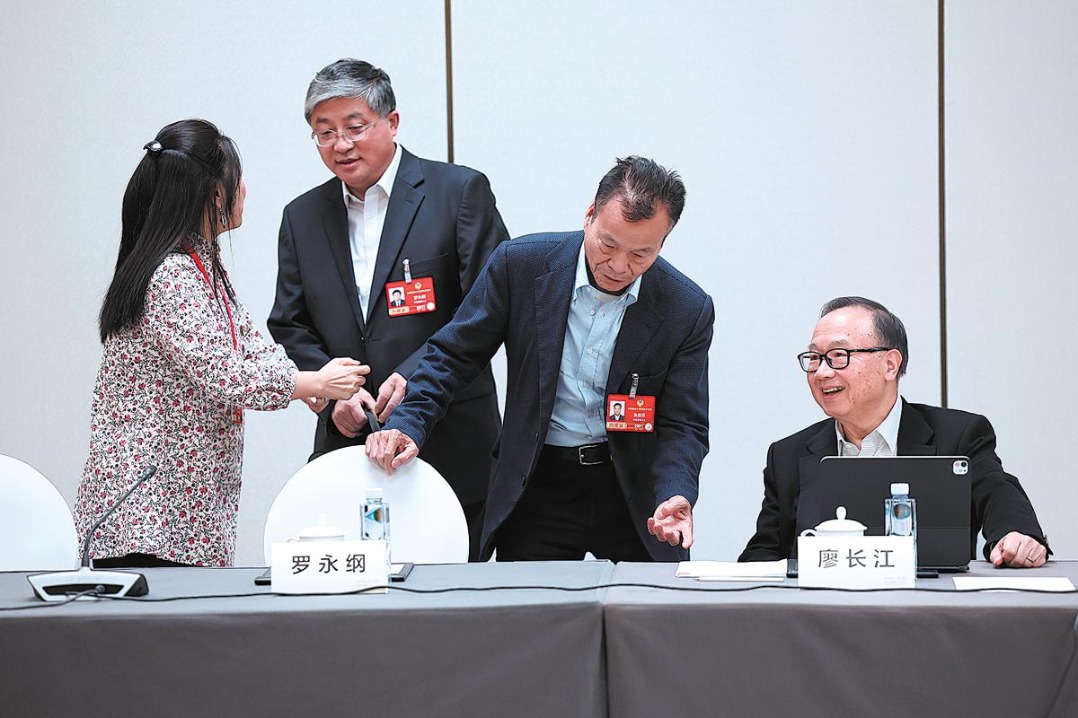
Vice-Premier Ding Xuexiang has called upon Hong Kong and Macao to actively leverage the substantial opportunities emerging from China’s 15th Five-Year Plan (2026-30), emphasizing the need for robust efforts toward high-quality economic development. The senior leader, who serves on the Standing Committee of the Political Bureau of the Communist Party of China Central Committee, delivered these remarks during a joint engagement with national political advisers from both special administrative regions at the fourth session of the 14th National Committee of the Chinese People’s Political Consultative Conference (CPPCC).
Ding affirmed that both cities have demonstrated comprehensive advancement across multiple sectors throughout the past year and are currently experiencing their most promising developmental phase. His address followed Premier Li Qiang’s Government Work Report, which reinforced the central government’s commitment to supporting Hong Kong and Macao in their deeper integration into national development strategies while contributing to the country’s overarching progress. The report further emphasized ambitions to transform the Guangdong-Hong Kong-Macao Greater Bay Area into an internationally recognized hub for scientific and technological innovation.
Jonathan Choi Koon-shum, a Standing Committee member of the CPPCC National Committee, disclosed that Vice-Premier Ding articulated five key expectations for the SARs. These included mobilizing various sectors within Hong Kong, particularly the business community, to provide substantive input for the formulation and execution of the territory’s inaugural five-year plan. Ding additionally encouraged both regions to accelerate the cultivation of new quality productive forces and enhance collaborative ventures with mainland China in cutting-edge fields such as artificial intelligence, big data, and biomedicine.
Ding emphasized Hong Kong’s distinctive advantage of having strong national backing while maintaining global connectivity, urging the city to assume a more prominent role within the Belt and Road Initiative. He also reiterated the importance of upholding the executive-led governance structure of the Hong Kong SAR and supporting the administration’s law-based governance, which he identified as fundamental to sustained stability and prosperity.
CPPCC National Committee member Melissa Kaye Pang, former president of the Hong Kong Law Society, noted that Ding highlighted the necessity of advancing high-quality economic growth with particular focus on major innovation centers including the Northern Metropolis and the Hong Kong-Shenzhen Innovation and Technology Park. Another committee member from Hong Kong, Samuel Yung Wing-ki, expressed confidence that the Hong Kong SAR government would proactively address future challenges and developmental requirements, citing Ding’s recognition of China’s impressive trade performance in 2025 despite external pressures.
Six CPPCC National Committee members from Hong Kong and Macao addressed the assembly, presenting insights on topics ranging from the establishment of Hong Kong as an international education hub and the enhancement of its technological innovation capabilities to positioning Macao as a critical conduit for international cultural and people-to-people exchanges.