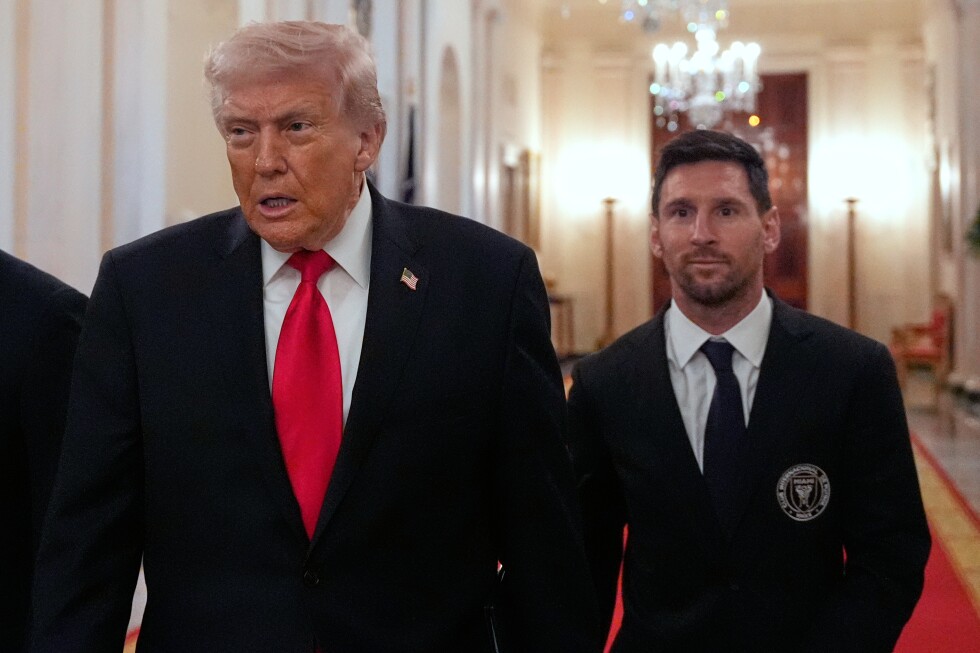
In a striking departure from his traditionally apolitical stance, global football icon Lionel Messi made a carefully orchestrated appearance at the White House alongside former President Donald Trump. The Inter Miami superstar, who has consistently avoided political engagements throughout his legendary career, presented Trump with a custom-designed pink soccer ball during Thursday’s ceremony honoring Major League Soccer champions.
The visit marks a significant deviation from Messi’s established pattern of political neutrality. When Argentina triumphed in the 2022 World Cup, Messi’s team notably declined an invitation to visit then-President Alberto Fernández’s Casa Rosada. Similarly, the athlete previously missed an opportunity to receive the Presidential Medal of Freedom from the Biden administration due to scheduling conflicts.
Reactions in Argentina ranged from surprise to disappointment among fans who valued Messi’s separation from political matters—a characteristic that distinguished him from his predecessor Diego Maradona, who openly embraced leftist leaders and revolutionary figures. Maradona’s tattoo of Che Guevara symbolized his political activism, while Messi has maintained strategic silence across multiple countries he’s called home.
Professor Kirk Bowman of Georgia Tech’s Sam Nunn School of International Affairs analyzed Messi’s approach as calculated ‘long-termism.’ The athlete’s substantial investments—including equity in Inter Miami—and his integration into Miami’s conservative-leaning soccer community suggest a deliberate strategy. Bowman notes that Messi’s perceived language barrier serves as ‘an extra layer of brand protection,’ allowing him to navigate political environments without explicit endorsement.
Throughout Trump’s comments on international affairs, Messi remained observantly silent, offering only polite applause. Inter Miami coach Javier Mascherano characterized the visit as following ‘protocol that is practically a tradition,’ downplaying the political significance.
Messi’s career at FC Barcelona demonstrated similar political deftness during Catalonia’s separatist movement. While occasionally participating in cultural celebrations, he avoided substantive political statements, maintaining appeal across divided fan bases. His 2024 comments acknowledging Barcelona as his children’s home and his own connection to the city exemplified his careful cultural positioning.
Despite brief interviews with left-leaning Argentine publication La Garganta Poderosa where he acknowledged societal inequality, Messi’s overall approach suggests limited political engagement. His commercial arrangements with Saudi Arabia and awareness of ‘sportswashing’ allegations indicate a primary concern for preserving ‘Brand Messi’ above political alignment.