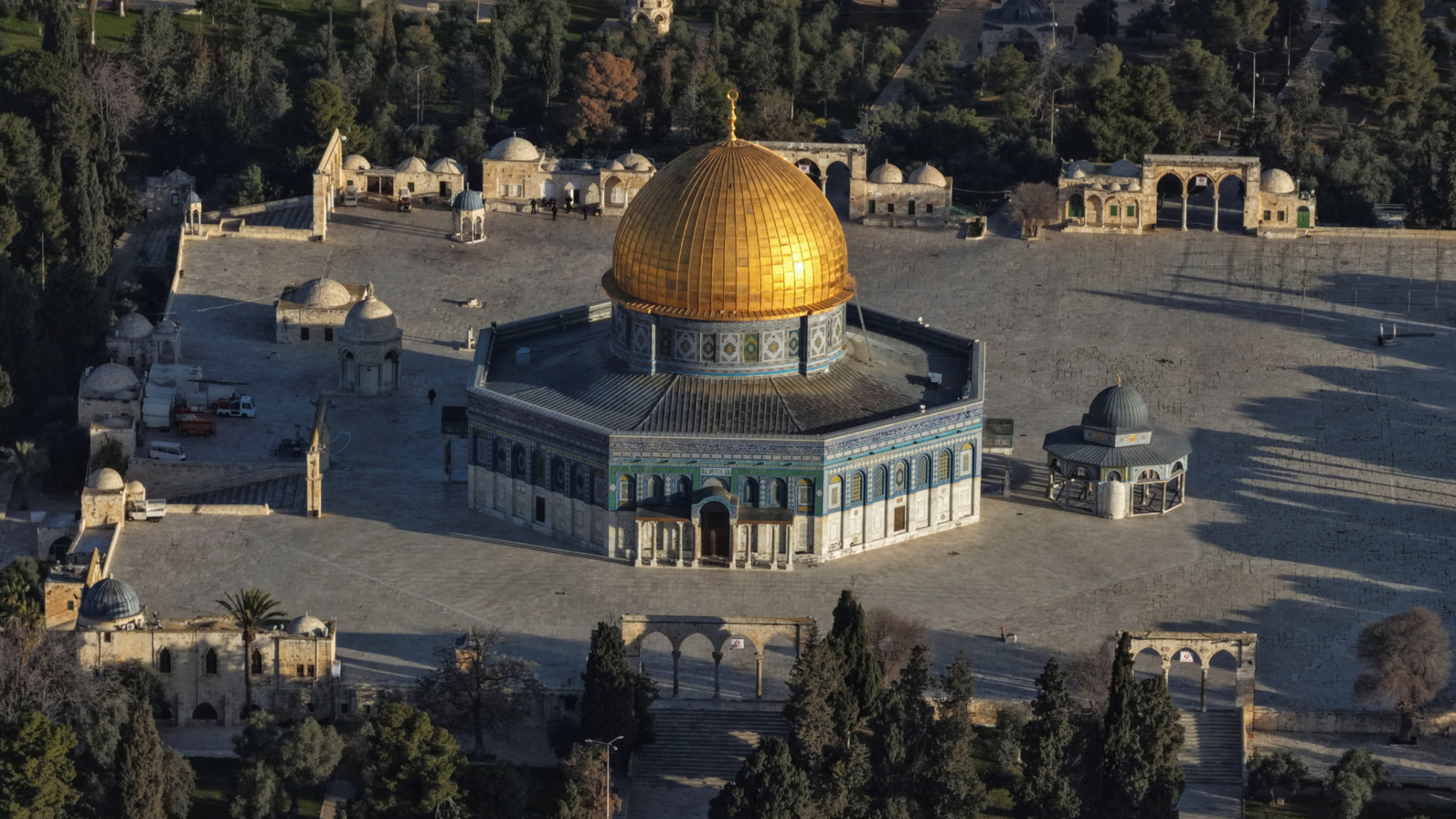
Israeli authorities have implemented an unprecedented closure of Jerusalem’s Al-Aqsa Mosque during Ramadan, prohibiting Friday prayers while permitting Jewish Purim celebrations to proceed elsewhere in the city. The move, justified as a security precaution amid ongoing conflict with Iran, has drawn sharp criticism from Palestinian communities and religious officials who view it as an intentional effort to empty the Islamic holy site of worshippers.
Aouni Bazbaz, director of international affairs at the Islamic Waqf which administers the mosque, warned Middle East Eye that prolonged closure risks serious consequences. “The continued closure of Al-Aqsa Mosque for a prolonged period, particularly when normalcy returns elsewhere, could carry risks and future consequences that cannot be ignored,” Bazbaz stated. He expressed concern that extended restrictions might heighten regional tensions and establish a dangerous precedent for future worship access.
The closure implemented shortly after Israel launched military operations against Iran has limited access to only a small number of mosque staff. Israeli forces have deployed at the Old City gates, preventing non-residents from entering while allowing shopkeepers and residents restricted access. This contrasts sharply with typical Ramadan periods when thousands of Palestinian worshippers crowd the mosque complex.
Jerusalem-based activist Fakhri Abu Diab challenged the official security justification, telling MEE: “The police and government do not care about protecting us—there are no bomb shelters for Palestinians in Jerusalem.” He characterized the closure as attempting to create a new reality where Israel controls access to the Islamic holy site, pushing Palestinians away from their right to worship.
The situation highlights the ongoing erosion of the international arrangement governing Al-Aqsa Mosque as an exclusively Islamic site. Since Israel’s 1967 occupation of East Jerusalem, Palestinians have witnessed gradual restrictions on Muslim access while Israeli control has expanded. Researchers specializing in Jerusalem affairs suggest the closure represents part of a broader effort to marginalize the Islamic role at the site and potentially isolate the mosque from its worshippers permanently.
International law considerations further complicate the situation, as Israel’s control over East Jerusalem violates principles stipulating that occupying powers cannot exercise sovereignty or make permanent changes in occupied territories. The Islamic Waqf has not yet issued an official statement, but concerns grow that temporary measures may evolve into permanent arrangements altering access patterns to one of Islam’s most significant religious sites.