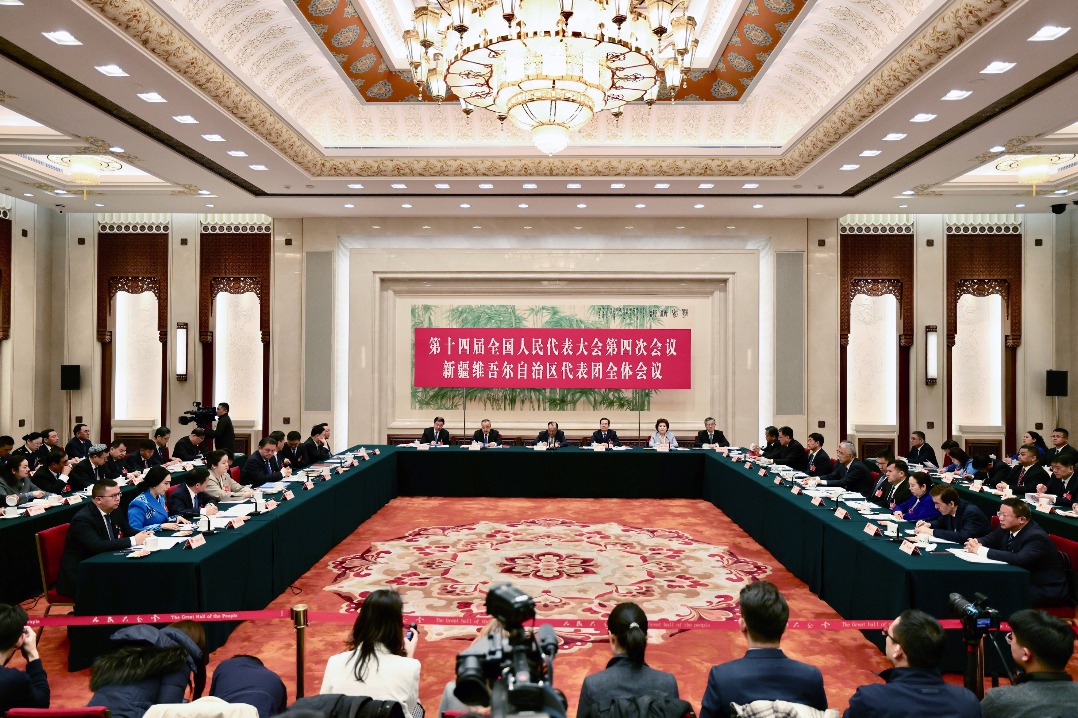
Xinjiang Uygur Autonomous Region is strategically positioning itself as a pivotal hub in global trade networks by capitalizing on its unique geographical advantages, according to Zheng Jun, a deputy to the 14th National People’s Congress and secretary of the Party Leadership Group of Xinjiang’s Department of Finance. Speaking during the ongoing two sessions in Beijing, Zheng outlined how the region’s transformation from a peripheral territory to a central trade corridor is driving unprecedented growth in foreign commerce.
The region’s foreign trade has demonstrated remarkable acceleration, surging from 156.9 billion yuan ($22.72 billion) in 2020 to break successive thresholds of 200, 300, 400, and 500 billion yuan between 2022 and 2025. The year 2025 alone witnessed a record 520.37 billion yuan in total trade volume, representing a 19.9 percent year-on-year increase that positioned Xinjiang as China’s fastest-growing regional trade economy.
This explosive growth stems from multiple synergistic factors: strategic location along the Asia-Europe transport corridor, enhanced logistical efficiency, robust industrial support, and favorable policy frameworks. Xinjiang has established commercial relationships with 228 countries and territories, continuously expanding its global economic partnerships.
A significant structural transformation is underway in the region’s export composition. Where previously dominated by energy and raw materials, Xinjiang now increasingly exports high-value manufactured goods featuring advanced technology and deep processing capabilities. Mechanical and electrical product exports reached 186.5 billion yuan in 2025, surging 40.7 percent annually, while electric vehicle exports grew 99.9 percent and solar cell exports expanded 187.4 percent.
The region has developed a comprehensive international logistics network integrating rail, road, and air transportation, consolidating its status as a cross-border logistics hub. This infrastructure enables accelerated domestic logistics and facilitates rapid connection between Xinjiang-manufactured products and global markets.
Looking toward the 15th Five-Year Plan period (2026-2030), Xinjiang plans to accelerate institutional opening-up and deepen integration between trade and investment sectors. The region aims to achieve high-quality development in foreign trade through steady expansion in scale, diversification of market participants, and continuous optimization of trade structures.