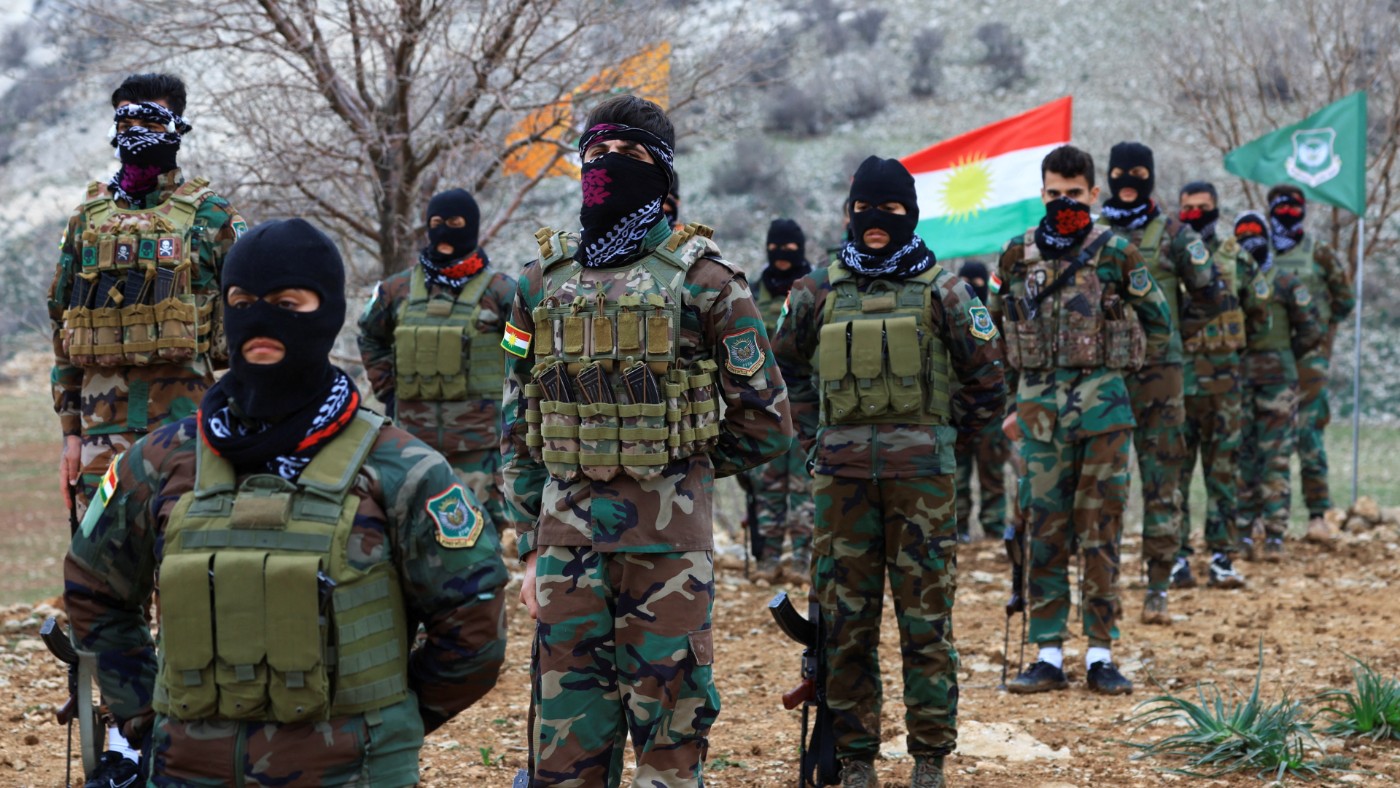
Amidst a rapidly escalating regional conflict, US air defense systems in northern Iraq are actively intercepting Iranian missiles and drones targeting bases of Iranian Kurdish opposition groups. The Kurdish Freedom Party (PAK) confirmed the ongoing defensive operations, though noting their limitations. A recent Iranian strike on a PAK base in Erbil province resulted in four casualties, including one fatality.
The PAK is a key member of a coalition of five major Iranian Kurdish opposition parties, formally established in late February. This alliance explicitly states its objective as working toward ‘the overthrow of the Islamic Republic of Iran.’ In response, Iran’s Islamic Revolutionary Guard Corps (IRGC) has vowed a ‘decisive and rapid confrontation,’ utilizing dozens of drones and ballistic missiles against these groups.
Analysts and officials indicate a significant shift in US strategy. Previously, US air defenses, such as the Patriot system, were primarily deployed to protect Erbil airport and American assets. However, since the commencement of the broader US-Israeli campaign against Iran, these defenses have been expanded to offer ‘as much protection as can be given’ to the Kurdish opposition parties. This change marks a stark contrast to previous incidents, such as the January 2024 Iranian strikes on Erbil that resulted in multiple civilian deaths, which were met with a lack of US intervention and subsequent local criticism.
The bolstered US protection has proven effective; despite dozens of Iranian attacks launched since late February, only one casualty has been reported, demonstrating the improved interception capabilities. Behind the scenes, communications are reportedly underway between US and Kurdish officials, exploring options for potential cross-border operations into Iran. While Kurdish groups like the PDKI state they have ‘not taken a decision to intervene in this war,’ former US President Donald Trump has publicly endorsed the idea of Kurdish forces entering Iran as ‘wonderful.’
This development signifies a deepening US-Kurdish regional partnership, viewed by some experts as a critical component of a broader mission objective for the US and Israel, with regime change in Iran now considered non-negotiable. For the Kurdish groups in exile, the established US air defense umbrella provides unprecedented security and represents a potential turning point in their long-standing conflict with Tehran.