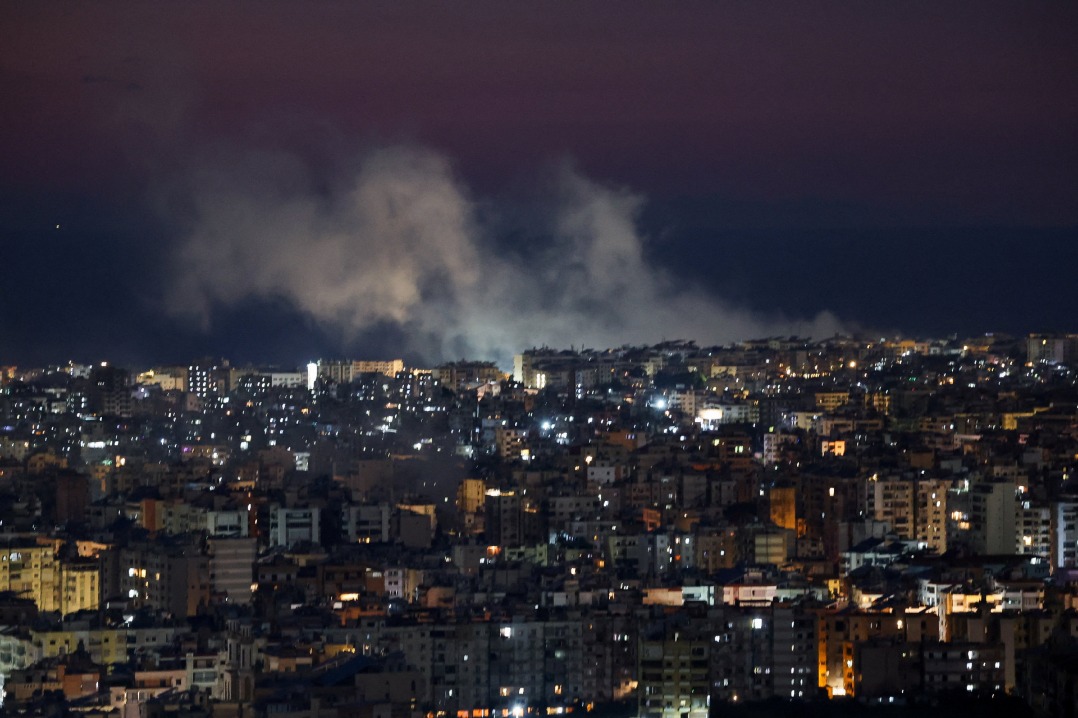
BEIRUT – In a significant escalation of hostilities, Israeli warplanes conducted a new series of airstrikes on the southern suburbs of Beirut late Thursday. The military action followed an unprecedented full-scale evacuation warning issued by Israel for the entire Dahieh area, a known Hezbollah stronghold.
The Israeli military’s urgent directive, demanding immediate departure of all residents from Beirut’s southern periphery, marked the first instance of such a comprehensive evacuation order for the region. The subsequent aerial bombardment created plumes of smoke visible across the city, as documented from vantage points in Baabda.
Lebanese health authorities reported a mounting humanitarian toll, with official figures indicating 123 fatalities and 683 injuries resulting from Israeli operations since Monday. The violence has created a rapidly deteriorating security situation throughout southern Lebanon.
Diplomatic channels saw intensified activity as Lebanese President Joseph Aoun engaged in urgent discussions with French President Emmanuel Macron. President Aoun detailed the deteriorating security conditions and specifically appealed for French intervention to prevent Israeli strikes on the southern suburbs of Beirut following the evacuation threats.
In parallel developments, President Macron also conferred with Lebanese Parliament Speaker Nabih Berri. The French leader communicated his government’s readiness to initiate necessary diplomatic contacts and provide urgent humanitarian assistance to Lebanon, according to statements from the National News Agency.
The current escalation cycle began when Hezbollah launched missile and drone attacks against Israel on Monday, characterizing the offensive as retaliation for the killing of Iran’s Supreme Leader Ali Khamenei and repeated Israeli military actions on Lebanese territory. Israel responded with extensive airstrikes targeting Hezbollah positions and deployed ground forces into southern Lebanon, signaling a potential expansion of the conflict.