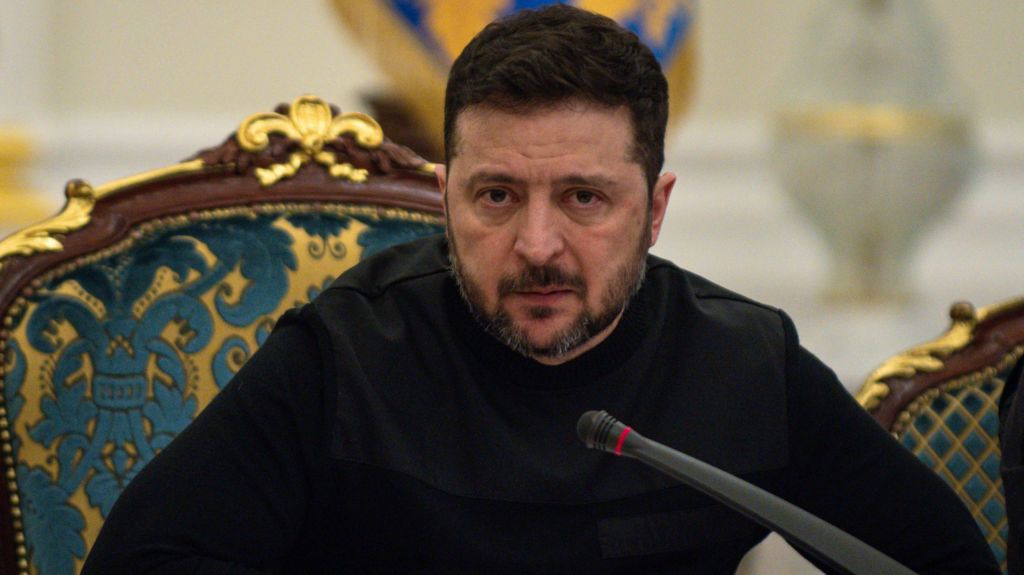
Ukrainian President Volodymyr Zelensky has revealed that the United States has formally requested Ukraine’s assistance in defending Gulf allies against Iranian drone attacks. This development marks a significant reversal of roles, with Ukraine—traditionally a recipient of Western military aid—now being positioned as a provider of critical defense expertise.
Speaking through social media channels, Zelensky confirmed that American officials have reached out for both technical knowledge and practical support in countering Iranian-designed Shahed drones. The Pentagon has declined to comment on these diplomatic exchanges. Ukraine’s president emphasized that any assistance would be contingent upon two non-negotiable conditions: that Ukraine’s own defensive capabilities remain uncompromised, and that such cooperation yields tangible diplomatic advantages for Kyiv.
The proposed arrangement centers on a strategic exchange: Ukraine would supply its proven drone interception technology to Gulf nations in return for additional U.S.-made Patriot air defense systems desperately needed to counter Russian ballistic missiles. This quid pro quo approach reflects Ukraine’s sophisticated understanding of geopolitical leverage amid ongoing conflicts in both Eastern Europe and the Middle East.
Zelensky has actively engaged with Gulf counterparts from the United Arab Emirates, Qatar, Bahrain, Jordan, and Kuwait, promising “concrete steps” to protect their military installations and civilian infrastructure. The irony of the U.S. request has not gone unnoticed in Ukraine, particularly given former President Donald Trump’s termination of direct military support, though intelligence sharing continues.
Ukrainian defense officials caution that while production capacity for interceptor drones could scale to 10,000 monthly units, any international transfers would require top-level political authorization. Ihor Fedirko, head of the Ukrainian Council of Defence Industry, highlighted the additional challenge of providing necessary training, noting that Ukraine’s training facilities are currently overwhelmed with domestic military and civilian demands.
The Middle East conflict has raised concerns about potential diversion of military resources away from Ukraine, particularly regarding scarce Patriot missiles. Zelensky noted that approximately 800 PAC-3 missiles had been deployed in recent days—exceeding Ukraine’s total receipts throughout the entire war. This disparity underscores the strategic calculus behind Ukraine’s conditional approach to cooperation.