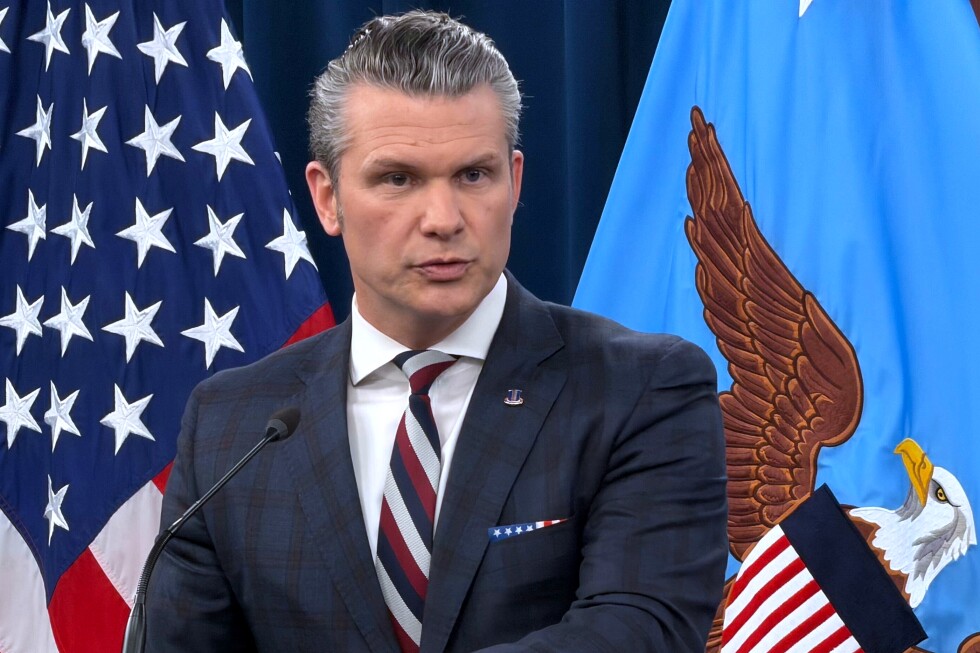
MIAMI — U.S. Defense Secretary Pete Hegseth issued a stark warning to Latin American nations on Thursday, demanding more forceful measures against drug cartels that threaten regional security. Speaking at the inaugural Americas Counter Cartel Conference at U.S. Southern Command headquarters, Hegseth declared that Washington stands ready to take unilateral action if allied governments fail to adequately combat these criminal organizations.
“America is prepared to take on these threats and go on the offense alone if necessary,” Hegseth told defense officials from more than a dozen conservative governments closely aligned with President Donald Trump, including Argentina, Honduras, and the Dominican Republic. The conference served as a precursor to a scheduled weekend summit between regional leaders and Trump at his Florida golf club.
Hegseth framed the security challenge as a civilizational struggle, emphasizing the shared Christian heritage of the Americas that he claimed was endangered by decades of inadequate responses to organized crime. He explicitly rejected continuation of previous policies, stating “business as usual will not stand,” while pledging U.S. support to combat cartels and “make the Americas great again.”
The defense secretary’s hardline position was reinforced by Deputy White House Chief of Staff Stephen Miller, who compared Western Hemisphere cartels to global terrorist organizations. “Cartels that operate in this hemisphere are the ISIS and al-Qaida of this hemisphere and must be treated just as ruthlessly,” Miller asserted, advocating for “hard power” and lethal force rather than criminal justice approaches.
This conference occurs within the context of the Trump administration’s strategic reorientation toward Latin America, described in national security documents as the “Trump Corollary” to the 19th-century Monroe Doctrine. Since taking office in January 2025, Trump has designated Mexican and Venezuelan cartels as foreign terrorist organizations and declared the United States to be in “armed conflict” with these groups.
The administration’s assertive stance has already translated into military action, including 44 naval strikes against suspected drug smugglers resulting in at least 150 deaths. A substantial naval deployment—the largest in Latin America since the Cold War—facilitated the January operation that captured Venezuela’s former president Nicolas Maduro, now facing drug charges in New York.
While the approach has gained support from conservative regional leaders like El Salvador’s Nayib Bukele and recently enabled joint U.S.-Ecuador operations against criminal groups, experts caution about the risks of militarizing law enforcement in regions with historically weak institutions and problematic military legacies.
Rebecca Bill Chavez, president of the Inter-American Dialogue and former deputy assistant defense secretary, warned: “Without strong rule-of-law institutions and civilian oversight, militarizing the fight against cartels can weaken the very institutions needed to defeat them.”