Iranian military and political leadership is undertaking extensive preparations for a potential internal civil war, anticipating that the United States and Israel will seek to instigate domestic unrest through separatist groups, according to internal sources within the Islamic Revolutionary Guard Corps (IRGC). These preparations, initiated after a intense 12-day conflict in June, represent a strategic shift in how Tehran plans to defend its territorial integrity.
Senior security officials concluded that future warfare would likely mirror strategies employed in Iraq and Syria, where external powers leveraged internal divisions. Consequently, Iran’s conventional army and the IRGC have been granted expanded autonomous operational authority across western, southwestern, and southeastern provinces. This decentralization is designed to ensure military units can continue operations even if communication with central command in Tehran is severed.
The Kurdish regions, particularly the provinces of Kurdistan, East Azerbaijan, and West Azerbaijan, have become a focal point for this new strategy. Iranian authorities anticipate that US and Israeli intelligence will empower Iranian Kurdish armed groups based in Iraq’s semi-autonomous Kurdistan region to launch attacks. In response, Iran has staged military exercises that are, in reality, the phased deployment of additional ground forces to these sensitive border areas since September.
The threat is not confined to the northwest. The oil-rich, Arab-majority province of Khuzestan in the southwest has also seen its military command granted expanded powers to counter the separatist Ahwaziyya armed group. Similarly, Sistan and Baluchestan province in the southeast, a key narcotics trafficking route and Iran’s poorest region, is considered highly vulnerable to attacks from ethnic armed groups.
The efficacy of this new preparedness was demonstrated in the rapid Iranian retaliatory strikes following recent attacks; retaliation was launched within an hour, a significant reduction from the 12-hour response time seen in the June conflict. IRGC sources revealed that missile unit commanders were pre-briefed on targets and authorized to act independently without awaiting orders.
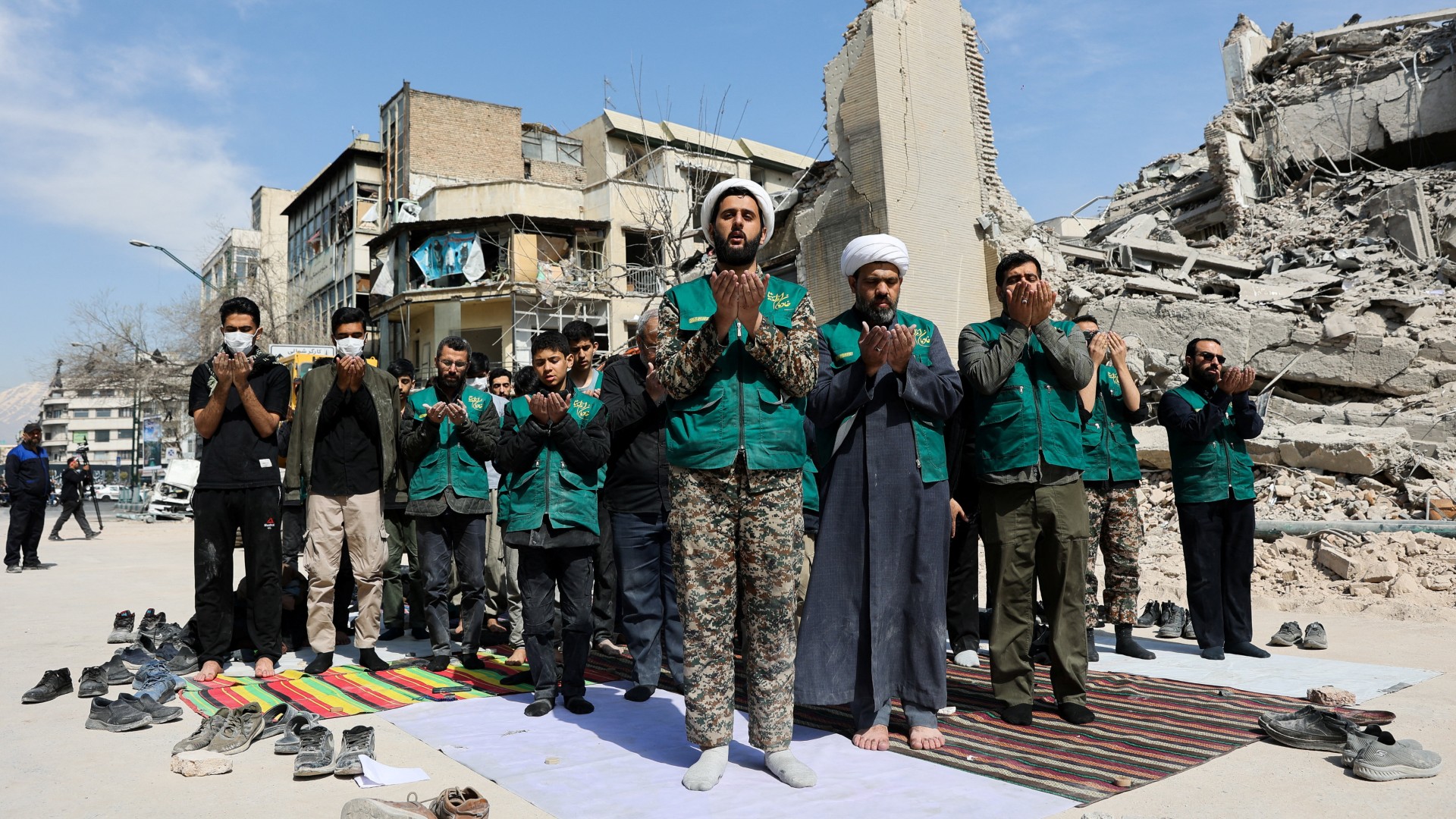
Concurrently, a massive domestic mobilization is underway. The Basij paramilitary force, boasting a nominal membership of 19 million with one million active members, has been granted extensive new powers for urban warfare. These plain-clothed forces, now visibly armed with Kalashnikov rifles and manning checkpoints in major cities like Tehran and Isfahan, are tasked with maintaining order amid attacks that have targeted police infrastructure, diminishing their capacity. This mobilization was publicly endorsed by reformist figure Hassan Khomeini, who called for government supporters to gather in mosques and city squares, invoking historical symbolism of a ‘black-clothes’ uprising, to form resilient strongholds against potential chaos.