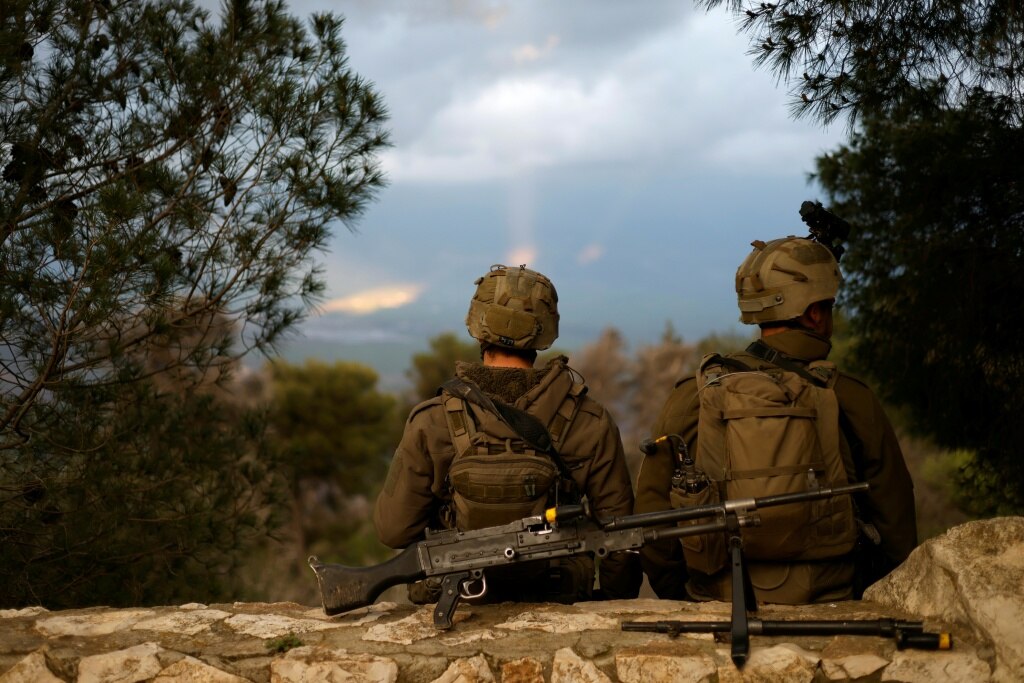
Israeli military operations in Lebanon have escalated into their fourth consecutive day, with ground forces advancing deeper into border territories while conducting sustained aerial bombardments targeting Hezbollah strongholds. The Iran-backed militant group has vowed to intensify its resistance against what it characterizes as existential aggression.
Recent developments indicate a significant expansion of hostilities beyond traditional conflict zones. AFPTV footage captured substantial smoke plumes rising from southern Beirut following early Thursday strikes, while Israeli tanks were observed operating within residential areas of Khiam, approximately six kilometers north of the Israeli border. The Israeli military had previously issued evacuation warnings for specific Beirut suburbs prior to these operations.
Hezbollah’s leadership, through deputy secretary-general Naim Qassem, has declared an unwavering commitment to continued confrontation. “We are facing aggression… our choice is to confront it until the ultimate sacrifice, and we will not surrender,” Qassem stated in his first address since hostilities resumed. The group claims to have executed at least fifteen attacks targeting Israeli positions, including areas as distant as Tel Aviv.
The human cost continues to mount dramatically. Lebanese authorities report at least 72 fatalities, 437 injuries, and approximately 83,000 displaced persons since Monday. Israel’s military has issued evacuation directives for residents south of Lebanon’s Litani River, encompassing a substantial territory extending roughly 30 kilometers north of the border, indicating potential further military action.
Notably, the conflict has expanded beyond Hezbollah’s traditional spheres of influence. Strikes hit the predominantly Christian Hazmieh suburb near Beirut’s presidential palace and diplomatic missions, marking the first reported Israeli attack in this area. Additional bombardments affected Aramoun and Saadiyat regions south of Beirut, with the health ministry confirming at least six casualties.
The United Nations Interim Force in Lebanon (UNIFIL) has documented Israeli military movements within Lebanese territory, characterizing these actions as violations of national sovereignty and territorial integrity. This development occurs despite the established truce agreement that permits only UN peacekeepers and the Lebanese army to operate armed south of the Litani River.
Israel’s military justification centers on creating a protective buffer zone inside Lebanon to safeguard Israeli civilians, deploying infantry, armored, and engineering units across southern Lebanese territories. Meanwhile, Hezbollah forces report engaging in direct clashes with Israeli troops, resulting in moderate injuries to two Israeli soldiers from anti-tank fire.