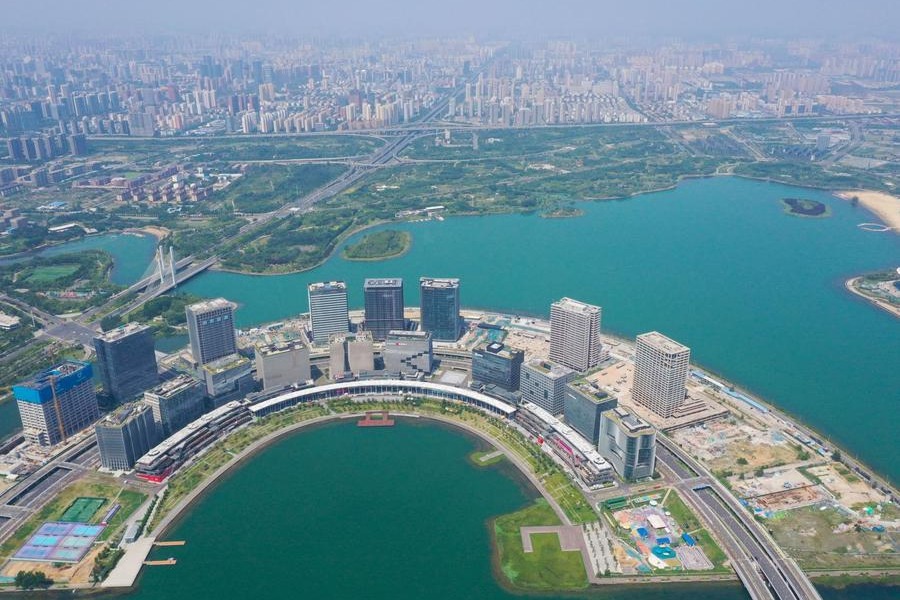
Central China’s Henan province is executing an ambitious strategy to transform into a high-capacity inland hub for global commerce, leveraging enhanced trade corridors and digital infrastructure to connect domestic and international markets. Under the leadership of Provincial Party Committee Secretary Liu Ning, the region is prioritizing integration with China’s national unified market as the cornerstone of its economic development framework.
The comprehensive approach centers on establishing Henan as a critical circulation nexus, facilitating the efficient movement of international products to Chinese consumers while simultaneously propelling locally manufactured goods onto the world stage. Cross-border e-commerce serves as the primary engine of this transformation, supported by an extensive network of specialized ports, bonded zones, and pilot e-commerce centers designed to streamline customs procedures and accelerate trade flows.
This strategic focus has yielded substantial economic returns, with provincial foreign trade reaching 935.67 billion yuan ($135.72 billion) in the previous year—representing a robust 14.1 percent growth compared to 2024. Henan has achieved national leadership in exporting diverse products including commercial buses, mobile devices, and hair products, with provincial capital Zhengzhou emerging as a dominant import-export center.
The province’s logistics capabilities demonstrate remarkable efficiency, particularly in perishable goods transportation. Cold-chain imports through Henan more than doubled year-over-year, with Malaysian durians clearing customs within half a day and reaching consumers nationwide within 36 hours. Norwegian chilled salmon now reaches markets within 24 hours of arrival, enabled by Henan’s innovative “pre-clearance + dedicated cargo flights + cross-border e-commerce” model that processes nearly 1,000 metric tons of outgoing cargo daily.
Henan’s global commercial integration extends beyond logistics to corporate expansion. Beverage chain Mixue Ice Cream and Tea has established comprehensive overseas warehousing systems and operates over 4,800 international stores. Yutong Bus maintains its position as the global leader in large and medium-sized bus sales for the fifteenth consecutive year, while Xuchang City distributes approximately 40,000 hair product sets worldwide each day.
Transport infrastructure metrics further underscore the province’s growing connectivity: Zhengzhou airport handled 1.033 million tons of cargo in 2025, representing a 25.2 percent annual increase and ranking fifth nationally for international cargo volume. The China-Europe and China-Central Asia freight train services from Zhengzhou have completed more than 17,000 journeys, establishing direct connections to 26 overseas stations and nine border ports.
Looking forward, Henan plans deeper integration during the second golden decade of China’s Belt and Road Initiative, enhancing Eurasian connectivity through expanded freight rail services, digital trade infrastructure development, and improved rail-sea intermodal transportation. The province will continue refining its business environment through institutional reforms, standardized procurement practices, and enhanced regulatory efficiency while reducing operational costs for land, energy, labor, and financing.
Foreign investors can anticipate streamlined administrative services and improved support systems covering entry procedures, residence permits, healthcare access, and payment processing. “Henan offers tremendous market potential, superior transportation networks, comprehensive industrial systems, and abundant human resources,” Liu affirmed. “Investment here presents exceptional opportunities and a promising future.”