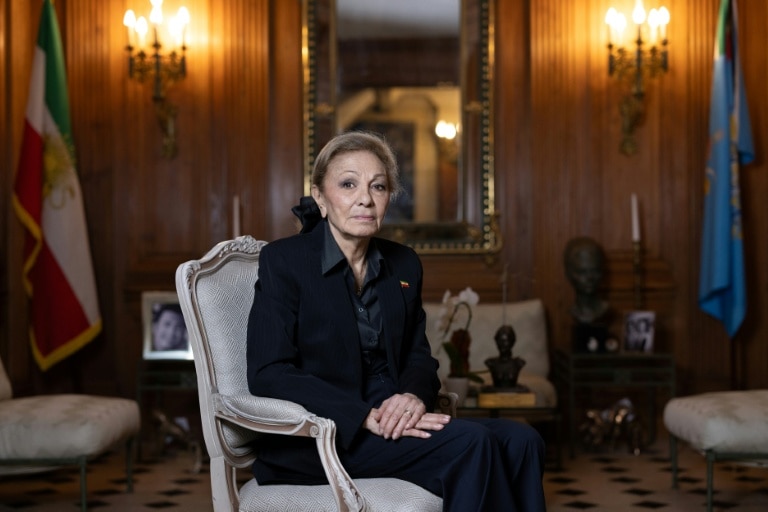
Farah Pahlavi, the exiled widow of Iran’s last monarch, has delivered a nuanced assessment of Iran’s political future following the death of Supreme Leader Ali Khamenei. In an exclusive interview with AFP conducted from her Paris residence, the former empress emphasized that while Khamenei’s demise represents a moment of profound historical significance, it does not guarantee the automatic dissolution of the Islamic Republic’s governing structure.
‘The departure of any single individual, regardless of their centrality within the power framework, does not mechanically precipitate the termination of an entire system,’ Pahlavi stated, referencing recent U.S.-Israeli military actions that resulted in Khamenei’s death. These events have plunged the Middle East into heightened instability while raising fundamental questions about Iran’s political trajectory.
The 87-year-old royal figure urged the global community to honor Iranian sovereignty and support citizens in determining their own national destiny. She identified the critical factor as ‘the capacity of Iran’s population to coalesce around a peaceful, orderly transition toward a constitutional government operating under established legal principles.’
Addressing her son’s political aspirations, Pahlavi confirmed that Reza Pahlavi—who has emerged as a potential alternative leader should the current government fall—is actively preparing transition frameworks. The U.S.-based crown prince gained international recognition during nationwide demonstrations earlier this year, where protesters frequently voiced support for the monarchist cause.
In a parallel development, Reza Pahlavi utilized social media platform X to advocate for national cohesion among Iran’s diverse ethnic communities, many of which face systemic discrimination. He specifically discouraged separatist movements from exploiting the current crisis for territorial fragmentation.
The former empress, exiled since the 1979 revolution that overthrew her pro-Western husband Mohammad Reza Pahlavi, called for international actors to prioritize Iranian self-determination over geopolitical strategizing. ‘My fundamental desire is for global powers to unequivocally support Iranians’ basic rights: selecting their leadership, expressing opinions freely, and pursuing dignified existence with economic prosperity,’ she articulated.
Pahlavi additionally appealed to Tehran’s authorities to exercise restraint and avoid violent suppression of dissent. This warning carries particular resonance following January’s unrest, which according to the U.S.-based Human Rights Activists News Agency (HRANA) resulted in over 7,000 fatalities—primarily protesters—with actual numbers likely higher. The organization additionally documented more than 53,000 arrests during this period.
The former monarch remains convinced that Iran’s protest movement represents an irreversible force whose success would contribute to global peace and security, echoing comments she made during January’s upheaval.