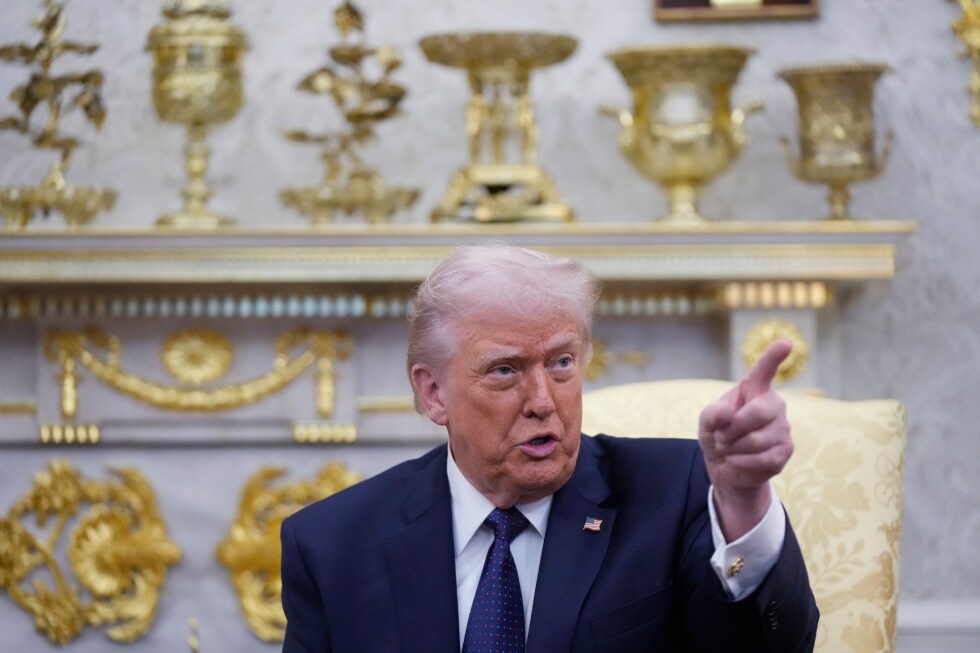
In a significant departure from his previous stance, President Donald Trump indicated on Tuesday that an internal figure from within Iran’s existing power structure might constitute the most suitable leadership option once military operations conclude. This marks a notable evolution from his weekend call for citizens to seize control of their government following the U.S.-Israel campaign that eliminated Supreme Leader Ali Khamenei and numerous senior officials.
Speaking during German Chancellor Friedrich Merz’s Oval Office visit—the first foreign leader engagement since hostilities commenced—Trump revealed that most potential successors previously identified by his administration had perished in the ongoing conflict. “Most of the people we had in mind are dead,” the president stated. “Now we have another group, they may be dead also, based on reports. So you have a third wave coming. Pretty soon we’re not going to know anybody.”
The administration explicitly dismissed Reza Pahlavi, the exiled crown prince seeking to position himself for a potential return, as a serious contender. Instead, Trump suggested that “somebody from within maybe would be more appropriate,” particularly “somebody that’s there, that’s currently popular, if there is such a person.” He emphasized concerns about installing leadership equally problematic as the previous regime, warning against a scenario where “in five years you realize you put somebody in who was no better.”
Concurrently, the White House intensified efforts to justify its decision to initiate hostilities, revealing through an anonymous senior official that negotiators Jared Kushner and Steve Witkoff had believed an enhanced version of the Obama-era nuclear agreement was achievable, though potentially requiring months of additional diplomacy. Despite this assessment, they reportedly advised Trump that Iran remained unwilling to meet U.S. demands satisfactorily.
The president simultaneously escalated tensions with European allies, threatening to sever all trade with Spain after it denied U.S. access to jointly operated bases for strikes not sanctioned by the UN charter. He additionally criticized British Prime Minister Keir Starmer’s initial reluctance to permit base usage, sarcastically noting “this is not Winston Churchill that we’re dealing with.”
Trump further contradicted Secretary of State Marco Rubio’s assertion that the U.S. acted preemptively due to anticipated Israeli action, insisting instead that he “might have forced Israel’s hand” based on intelligence suggesting an imminent Iranian attack.
Chancellor Merz emphasized Germany’s interest in collaborating on a post-conflict strategy, noting the conflict’s damaging impact on global oil prices. Trump acknowledged temporary energy price increases but predicted they would ultimately fall “lower than even before” once hostilities cease.