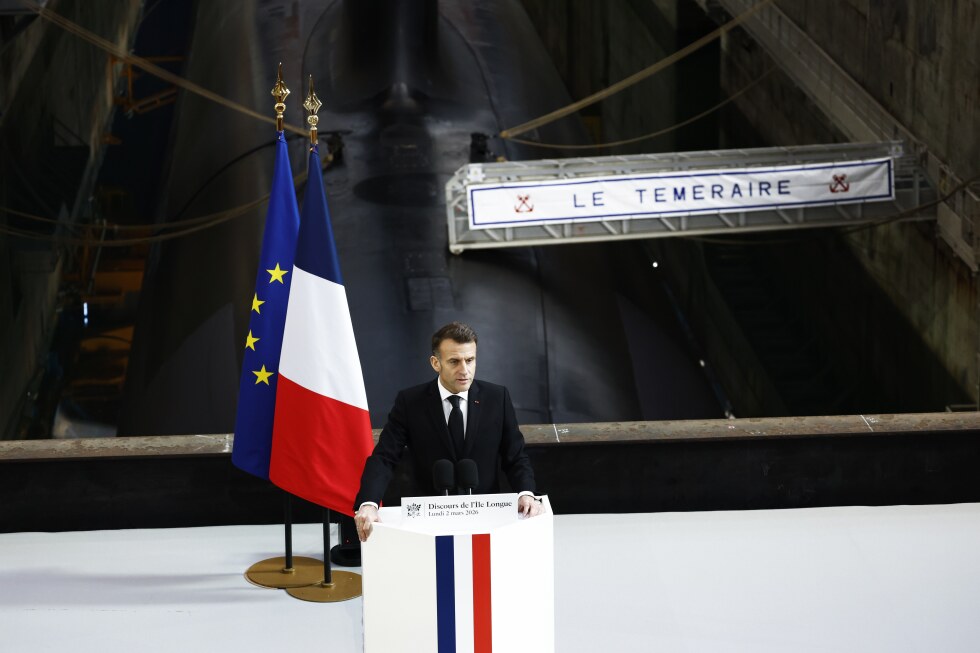
In a landmark strategic shift, French President Emmanuel Macron has unveiled plans for enhanced nuclear deterrence coordination with European allies while maintaining France’s sovereign authority over launch decisions. Speaking from a classified submarine base in Western France, Macron articulated a vision for ‘forward deterrence’ that marks a significant evolution in continental security architecture.
The initiative emerges against a backdrop of growing European skepticism regarding American defense commitments and heightened tensions with nuclear-armed Russia. As the European Union’s sole nuclear power since Brexit, France has initiated consultations with eight nations—Britain, Germany, Poland, Netherlands, Belgium, Greece, Sweden, and Denmark—to establish a collaborative security framework.
Macron’s proposal includes the unprecedented option for temporary deployment of French nuclear-armed aircraft to allied territories and joint participation in deterrence exercises. The president emphasized that while European partners would gain ‘a clearly affirmed link’ to French nuclear capabilities, constitutional authority for any weapons deployment remains exclusively with the French presidency.
Nuclear experts identify inherent complexities in this approach. Florian Galleri of MIT’s security studies program notes the fundamental contradiction between offering nuclear guarantees while avoiding joint decision-making: ‘Strategic backing intended to integrate French nuclear deterrence into collective European defense necessarily requires coordination and joint planning.’
The new doctrine also addresses evolving threats through force modernization. Macron announced plans to increase France’s nuclear warhead inventory for the first time since the Cold War’s conclusion, responding to advancements in adversary defenses and regional proliferation risks. France currently maintains an estimated 290 warheads.
Significantly, Macron positioned the initiative as complementary to NATO’s existing nuclear mission, which France does not participate in directly. Ian Lesser of the German Marshall Fund observed that the proposal reflects Europe’s transformed security environment following Russia’s invasion of Ukraine and uncertainties about America’s commitment.
The French approach envisions integrating European conventional capabilities—including early warning systems, satellite surveillance, missile tracking, and air defense networks—to support nuclear deterrence operations. This reimagined European security framework represents Macron’s continued advocacy for strategic autonomy while acknowledging NATO’s enduring role in continental defense.