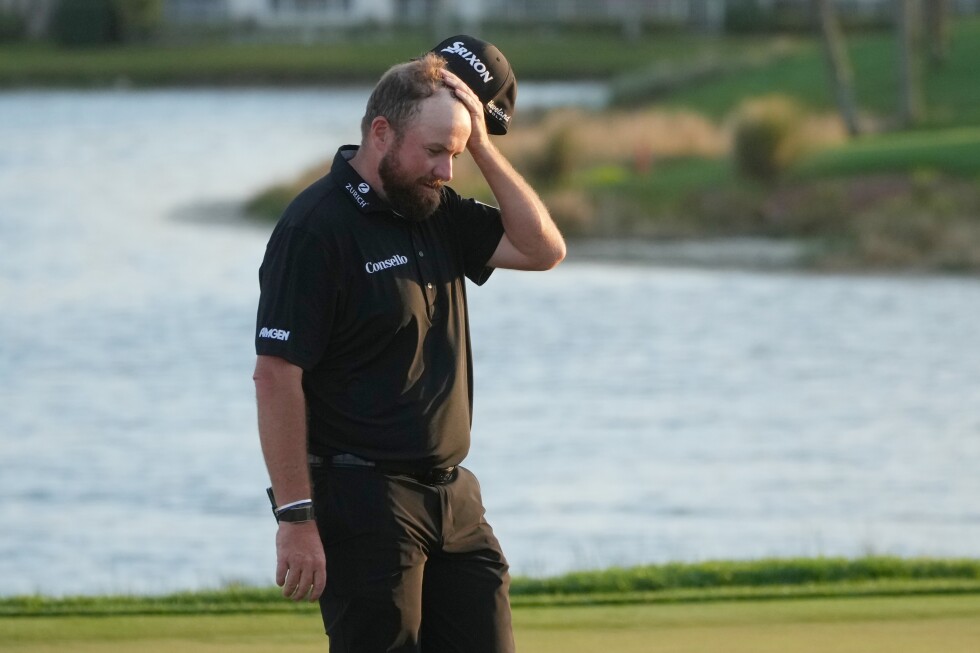
In a stunning reversal of fortune at PGA National, Irish golfer Shane Lowry experienced one of the most devastating collapses in recent tournament history during the final round of the Cognizant Classic. The 2019 Open Champion held a commanding position with victory seemingly assured until a catastrophic sequence on the 16th and 17th holes transformed certain triumph into heartbreaking defeat.
Lowry’s personal motivation centered around creating a special moment for his 4-year-old daughter Ivy, envisioning her ‘ginger hair running down the 18th green’ to celebrate what would have been her first time witnessing her father’s victory. This poignant family narrative made the subsequent collapse particularly emotional for spectators and players alike.
The dramatic turnaround began when Lowry’s 3-iron approach on the 16th found water, resulting in a double bogey that narrowed his lead to a single stroke. The situation deteriorated further when opponent Nico Echavarria birdied the par-3 17th to draw level. Lowry’s response—a perfectly calculated 7-iron chip that should have secured advantage—instead found water, producing another double bogey and completing a five-shot swing across two holes.
This collapse joins golf’s extensive history of dramatic reversals, including Scott Hoch’s missed 30-inch putt at the 1989 Masters and Mike Reid’s three-shot lead evaporation during the same year’s PGA Championship. Lowry himself referenced his recent Ryder Cup heroics—where he birdied three of the final four holes to secure Europe’s victory—highlighting the sport’s extreme emotional whiplash between triumphant highs and devastating lows.
Golf legend Jim Furyk’s observation that ‘losing always hurts worse than winning feels good’ perfectly encapsulates the emotional reality facing professionals. Lowry’s response demonstrated professional resilience as he immediately looked toward his next tournament appearance at Bay Hill, acknowledging golf’s unpredictable nature while committing to move forward despite the disappointment.