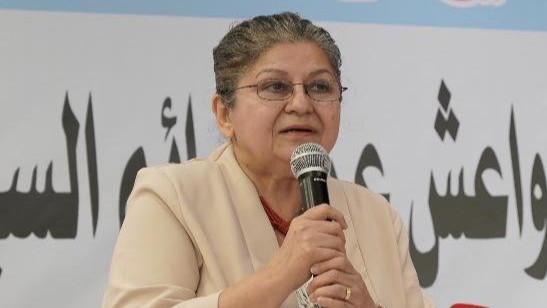
In a devastating blow to Iraq’s women’s rights movement, renowned feminist activist Yanar Mohammed was fatally shot by unidentified gunmen outside her Baghdad residence on Monday. The Organization for Women’s Freedom in Iraq (OWFI), which Mohammed co-established in 2003, confirmed her death after emergency medical efforts failed to save her from critical wounds sustained in the attack.
The assassination has sent shockwaves through civil society circles, with OWFI vowing to continue its mission despite the profound loss. ‘Yanar Mohammed’s legacy will endure through every woman whose life was transformed by her advocacy and every stand taken against violence and discrimination,’ the organization declared in an emotional Facebook statement, committing to maintain safe houses and amplify its defense of women’s right to security and dignity.
Mohammed’s groundbreaking work positioned her as a formidable opponent of sectarian and discriminatory legislation. She recently led opposition against a controversial family law bill based on Shia religious jurisprudence that would have granted husbands automatic child custody and unilateral divorce rights. While the legislation ultimately passed, public outcry spearheaded by Mohammed and other activists succeeded in removing its most extreme provisions, including a clause that would have permitted marriage for girls as young as nine.
In a 2024 interview with Middle East Eye, Mohammed characterized such legislative efforts as deliberate distractions from governmental corruption, stating authorities sought to ‘terrorize Iraqi women and civil society with archaic laws that strip away modern rights.’
This killing continues a alarming pattern of violence against government critics and women’s rights defenders in Iraq. The 2018 assassination of Basra activist Suad al-Ali and the 2020 killing of nutritionist Riham Yacoub underscore the perilous environment for activists. Despite repeated governmental promises to protect activists and prosecute their killers, deep connections between ruling political factions and armed groups have fostered widespread skepticism about accountability.
The Communist Alternative Organization in Iraq, where Mohammed served on the Central Committee, has explicitly held the government responsible for delivering justice, pledging that her memory would ‘remain a shining flame guiding the struggle for women’s liberation and a world free of injustice.’ No group has yet claimed responsibility for the assassination.