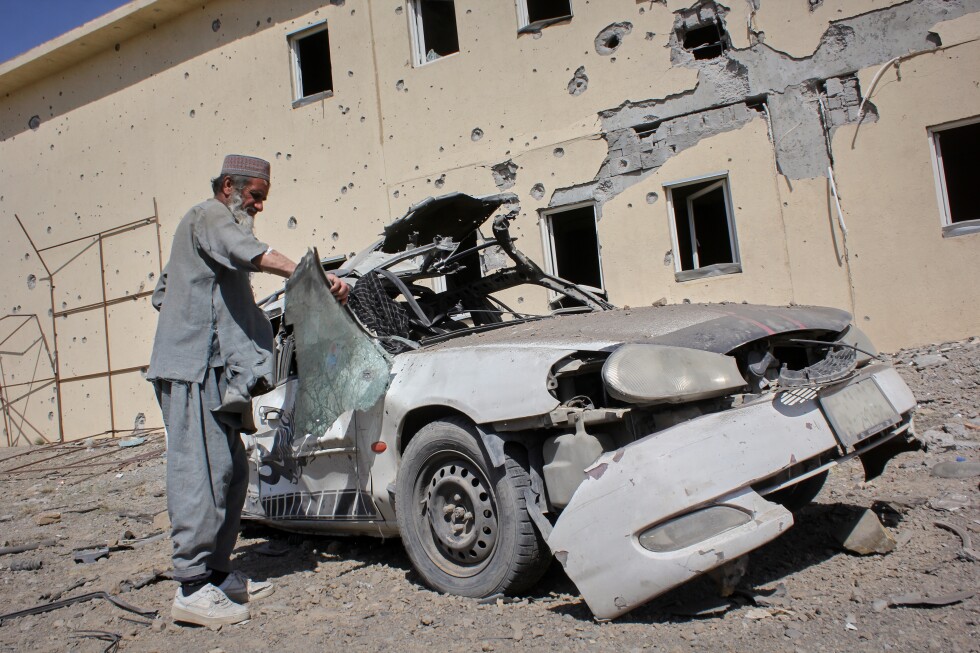
ISLAMABAD (AP) — A significant escalation of hostilities erupted along the Pakistan-Afghanistan border early Tuesday as Afghan ground forces launched coordinated assaults against Pakistani military installations. According to Pakistani officials, the attacks targeted 16 distinct locations in the southwestern province of Balochistan, specifically in the districts of Qilla Saifullah, Nushki, and Chaman. Concurrently, Afghan forces initiated offensive operations at 25 points in the northwestern Khyber Pakhtunkhwa border region.
Pakistani Information Minister Attaullah Tarar declared that national forces ‘successfully repelled these multiple attacks.’ In a statement released on the social media platform X, Tarar detailed that Pakistani retaliatory strikes resulted in the deaths of 67 members of the Afghan security forces. He further reported that one Pakistani soldier was killed during the intense cross-border exchanges of fire.
This recent surge in violence marks the fifth consecutive day of active combat between the two neighboring nations, effectively terminating a ceasefire arrangement that had been mediated by Qatar and Turkey in October. The current cycle of retaliation began last Thursday, with Afghanistan characterizing its actions as a direct response to Pakistani airstrikes conducted the prior Sunday.
Since the initiation of hostilities, Pakistan has asserted the elimination of 435 Afghan security personnel and the capture of 31 strategic positions. Kabul has not provided immediate commentary on the specific casualty figures released by Islamabad, though Afghan authorities have previously claimed to have inflicted substantial losses upon Pakistani military units.
Pakistani President Asif Ali Zardari defended the ongoing military operations on Monday, emphasizing that Islamabad had exhausted all diplomatic avenues before authorizing strikes against militant factions operating from Afghan territory. Zardari issued a direct appeal to the Taliban government in Kabul to disarm groups responsible for orchestrating attacks within Pakistan.
The situation has drawn international concern as Pakistan has formally characterized the conflict as an ‘open war’ with Afghanistan. The restive border region remains a known stronghold for multiple militant organizations, including al-Qaida and the Islamic State group. Pakistan attributes a recent surge in domestic violence primarily to the outlawed Tehreek-e-Taliban Pakistan (TTP), which maintains operational bases both inside Pakistan and across the border in Afghanistan. Islamabad accuses the Afghan Taliban government of providing safe havens to the TTP, an allegation consistently denied by Kabul.