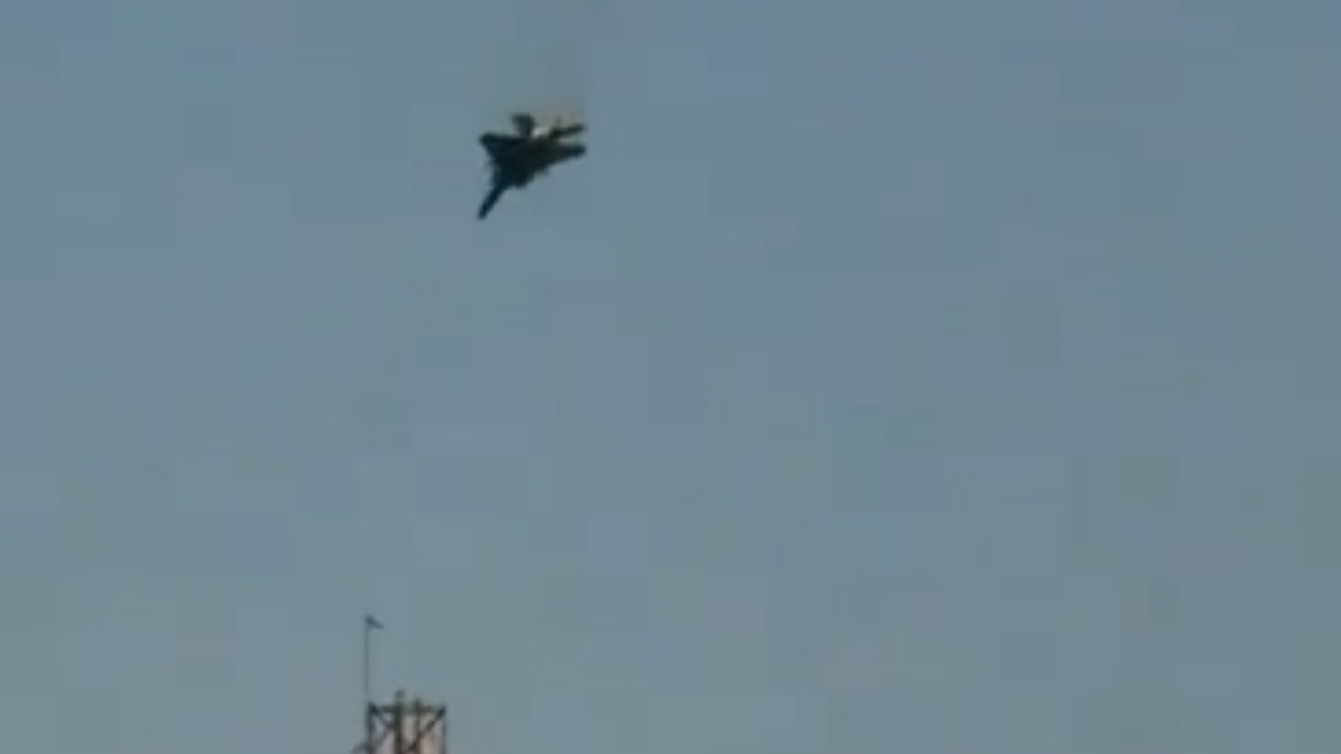
An F-15 fighter jet crashed in western Kuwait near Al Jahra on March 2, 2026, with both pilots successfully ejecting from the aircraft and surviving the incident. Preliminary reports indicate the crash occurred approximately 4.5 miles from Highway 70, though neither U.S. nor Kuwaiti authorities have immediately confirmed details about the aircraft’s origin or the nationality of its crew.
Unverified sources suggest the pilots may have been American or Israeli, but independent verification remains unavailable. Video evidence geolocated by open-source investigators shows one pilot descending by parachute near the crash site, confirming the ejection sequence was successfully activated.
The incident occurs against a backdrop of heightened military activity throughout the Gulf region. Earlier the same day, Kuwait’s Air Defense Force reported intercepting multiple ‘hostile’ drones approaching areas near the capital city. Brigadier General Mohammad al-Mansouri stated that defense personnel neutralized a majority of these drones in the Salwa and Hawally districts.
These developments follow joint U.S.-Israeli strikes against Iranian targets that resulted in the death of Supreme Leader Ayatollah Ali Khamenei and several senior Iranian military figures, including IRGC commander Mohammad Pakpour and Defense Minister Aziz Nasirzadeh. Iran has vowed retaliation and continues launching missile and drone attacks against Israeli and U.S. assets throughout the region.
European powers have entered the fray, with France, Germany, and the United Kingdom expressing readiness to protect their interests and those of Gulf allies through defensive measures. The UK has specifically authorized the U.S. to utilize British bases for targeting Iranian missile sites ‘at source,’ though British forces have not participated directly in offensive operations against Iran.
Regional analysts warn that prolonged conflict may push Gulf Cooperation Council states toward closer alignment with U.S. military objectives. Firas Maksad of Eurasia Group noted that ‘Iran is forcing the GCC up the escalation ladder,’ potentially necessitating greater operational freedom for U.S. forces operating from regional bases. UAE Minister of State for International Cooperation Reem Al Hashimy similarly suggested potential support for U.S. operations if Iranian retaliatory strikes continue.
The cause of the F-15 crash remains undetermined, with possibilities ranging from mechanical failure to hostile action amid the complex regional conflict.