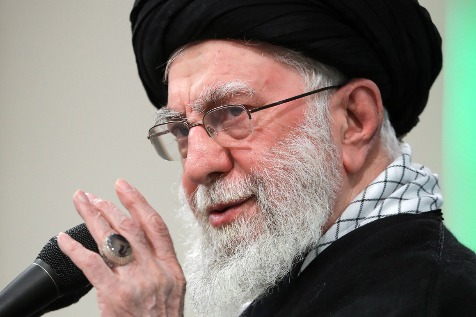
Iran has officially confirmed the death of Supreme Leader Ayatollah Ali Khamenei in what it describes as a coordinated military assault by United States and Israeli forces. The announcement, delivered through state-affiliated media outlets early Sunday, marks a pivotal moment in Middle Eastern geopolitics.
According to Nour News, which maintains direct connections to Iran’s Supreme National Security Council, Khamenei ‘attained martyrdom while performing his official duties at his Tehran office’ during Saturday’s operations. The attack reportedly resulted in multiple casualties within the leader’s immediate family, including his daughter, son-in-law, grandchild, and one daughter-in-law.
In response to the incident, the Iranian cabinet has declared a 40-day national mourning period. An official government statement characterized the event as a ‘brutal attack by the criminal US government and the sinister Israeli regime,’ praising Khamenei’s 37-year leadership as sagacious and visionary.
The Iranian government has pledged to hold those responsible accountable, warning that perpetrators would ‘regret their actions.’ Following constitutional protocols, leadership responsibilities will temporarily transition to a triumvirate consisting of Iran’s president, judiciary chief, and a designated jurist from the Constitutional Council, as outlined in Article 111 of the Iranian Constitution.
The Islamic Revolutionary Guard Corps (IRGC) issued a separate statement through its Sepah News outlet, condemning the attack as a ‘criminal and terrorist act’ that violated international norms. The IRGC vowed that Iran would exact ‘a hard, decisive, and regret-inducing punishment’ against those responsible.
Public demonstrations erupted across multiple Iranian cities following the announcement, with mourners expressing both grief and demands for retaliation. The events unfold against the backdrop of escalating military engagements, with Iran having launched counterstrikes against US and Israeli military installations throughout West Asia in response to Saturday’s initial operations.
Khamenei, born in 1939, assumed Iran’s highest leadership position in 1989 following the death of Islamic Republic founder Ayatollah Ruhollah Khomeini. His death creates a significant power vacuum in a nation already grappling with regional tensions and international sanctions.