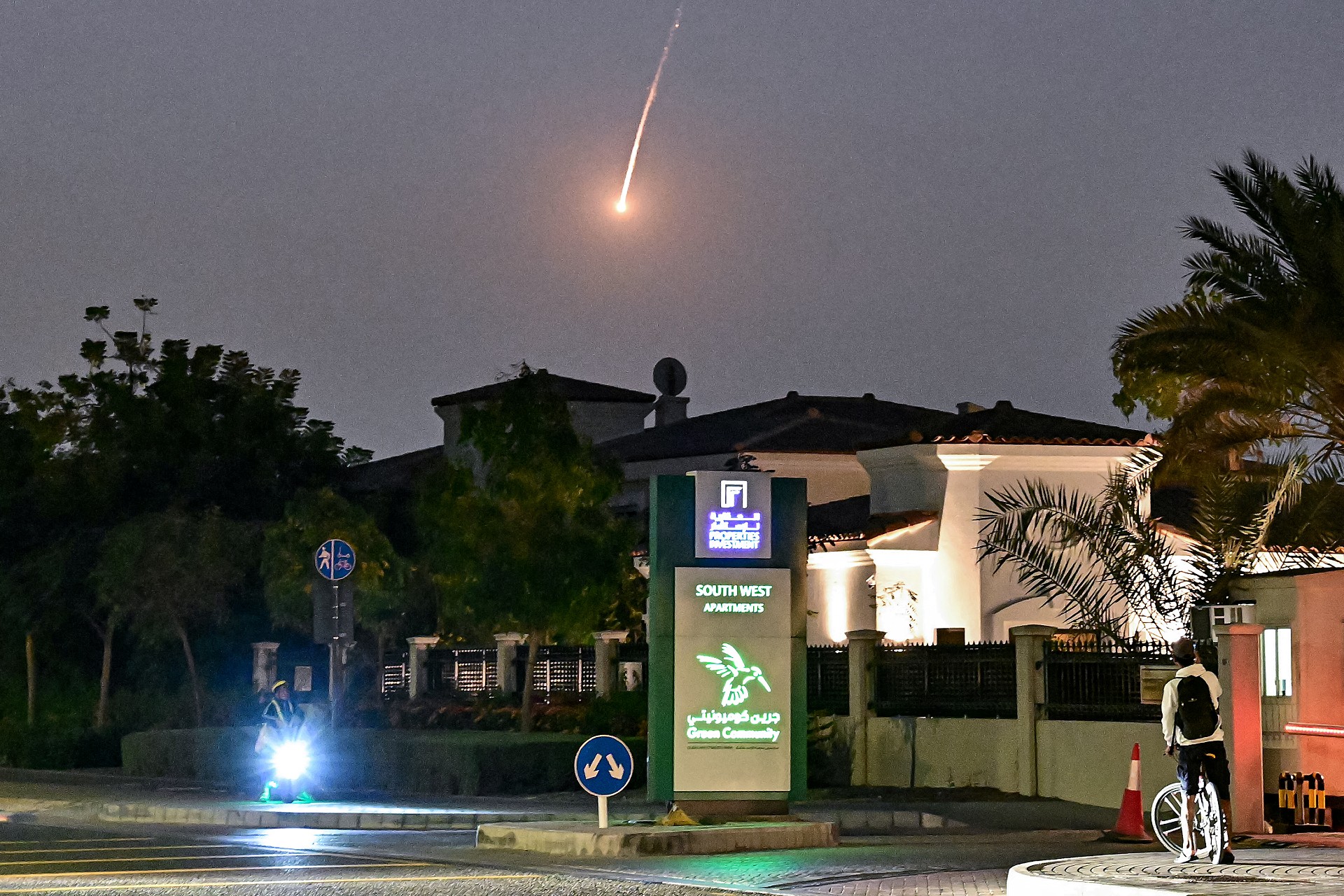
The United Arab Emirates found itself on the frontline of regional conflict this Saturday as Iranian-origin missiles and drones targeted both Dubai and Abu Dhabi, marking a significant escalation in Middle Eastern tensions. The attacks represent the first major spillover of the US-Israeli conflict with Iran into Gulf states, with UAE air defense systems intercepting multiple projectiles while some managed to penetrate the protective shield.
Eyewitness accounts from Dubai residents described visible plumes of smoke near prominent landmarks including the Fairmont the Palm and Dubai Marina neighborhoods. Verified video footage circulating online appeared to capture the moment an Iranian Shahed drone struck the city. Simultaneously, Abu Dhabi residents reported hearing distinct sounds of missile interceptions overhead as defense systems engaged incoming threats.
The UAE stands among several Gulf nations—including Qatar, Kuwait, Saudi Arabia, and Bahrain—that have come under Iranian fire, presumably targeting US military installations throughout the region. The Al Dhafra Air Base, located just outside Abu Dhabi and housing approximately 5,000 American military personnel, represents one such potential target.
In response to the crisis, UAE President Sheikh Mohammed bin Zayed Al Nahyan initiated emergency communications with Saudi Crown Prince Mohammed bin Salman and Qatari Emir Sheikh Tamim bin Hamad Al Thani. All parties unanimously condemned Tehran’s aggressive actions against regional stability.
Official statements from UAE authorities emphasized that defense systems handled the missile strikes “with high efficiency, without any serious material damage,” while maintaining that “the situation remains under full control.” Despite these assurances, the Ministry of Economy issued guidance against stockpiling basic commodities, while the National Emergency Crisis and Disasters Management Authority warned residents against approaching or photographing fallen shrapnel.
Tragically, one Pakistani national confirmed lost his life due to shrapnel impact in Abu Dhabi, marking the first casualty from the attacks.
The aviation sector experienced significant disruption as authorities initially advised passengers to avoid Dubai International and Al Maktoum International airports before suspending all flights indefinitely by afternoon. Travelers like Mariam (a pseudonym) found themselves stranded for hours before receiving confirmation of flight cancellations, with luggage remaining at airports throughout the crisis.
Abu Dhabi resident Omar (also a pseudonym) described receiving location-based emergency alerts directing citizens to seek shelter in secure buildings and avoid windows—a precaution not universally distributed across the emirate.
Despite official attempts to maintain normalcy, visible signs of unease emerged throughout Dubai. Ridesharing driver Akhtar noted significantly lighter than normal traffic patterns “because of the Iran-America situation,” while numerous high-profile retail establishments including Apple’s flagship store and luxury brands like Maison Margiela, Kenzo, and Christian Louboutin closed their doors during typically busy Ramadan shopping periods.
The UAE’s strict regulations regarding unverified information sharing—with penalties reaching approximately $55,000 for violations—have created a climate of cautious communication among residents. Nevertheless, social media platforms showed Emirati citizens sharing images of smoke plumes and expressing support for national security services at local establishments such as shisha bars in Dubai’s Business Bay district.