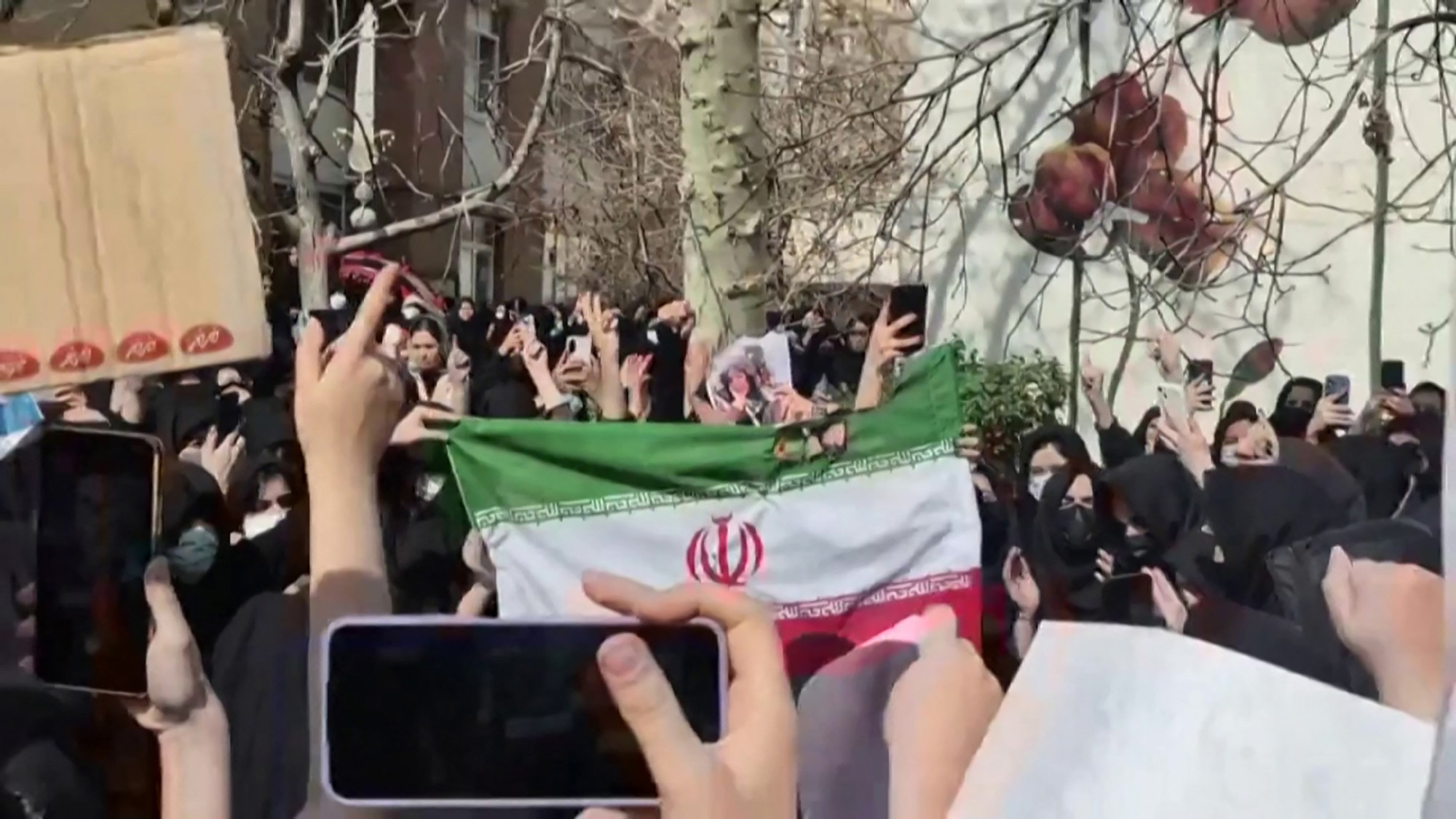
Iranian authorities have abruptly reversed their decision to reopen universities for physical instruction, ordering a return to online learning merely five days after campuses welcomed students back. This swift reversal follows renewed waves of student-led protests and violent confrontations with state-affiliated paramilitary forces at multiple academic institutions across the country.
The brief resumption of in-person classes witnessed significant turmoil, including clashes between student demonstrators and members of the Basij militia at prominent universities such as Sharif, Khajeh Nasir, and Elmo Sanat in Tehran. At Al-Zahra University, protesters tore down the official post-revolution flag while chanting anti-government slogans targeting both current Supreme Leader Ali Khamenei and the republic’s founder, Ayatollah Khomeini.
These demonstrations largely served as memorial gatherings marking the 40th day since security forces killed numerous protesters during nationwide unrest in late December and January. A 21-year-old Tehran University student, speaking anonymously, expressed collective grief and anger over the fatalities, stating campus spaces provide one of the few remaining avenues for dissent amid widespread suppression.
Official government figures claim 3,117 deaths during the recent protest wave, though external human rights organizations, including the US-based Human Rights Activists News Agency, estimate the actual toll exceeds 6,480 individuals. Middle East Eye could not independently verify these figures due to severe information restrictions within Iran.
The current protest cycle initially erupted in response to drastic currency devaluation but rapidly evolved into broader anti-establishment movements. Authorities had previously shifted universities to online platforms in early January, ostensibly due to weather conditions—a move widely interpreted as an attempt to neutralize Iran’s historically potent student activism.
Academic professionals note that universities have consistently served as critical hubs for political criticism throughout modern Iranian history, particularly when formal opposition channels are suppressed. This pattern dates to the Pahlavi era, continued through the 1980-1983 Cultural Revolution that purged dissident academics, and persists today through the Basij’s campus monitoring units.
Despite decreased protest visibility following administrative crackdowns and student suspensions, those interviewed maintain that underlying tensions remain unresolved and anticipate further demonstrations in the future.