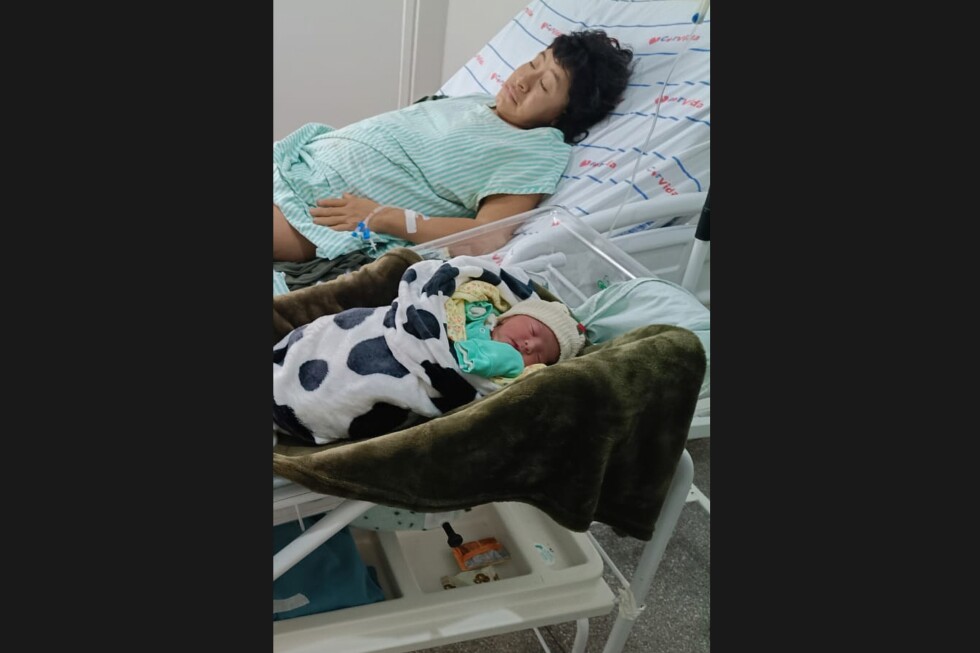
In a remarkable turn of events that challenges predictions of cultural extinction, the birth of a baby boy has revitalized hopes for the survival of Brazil’s Akuntsu people—one of the Amazon’s most endangered Indigenous communities. For years, only three women remained as the last surviving members of this tribe decimated by decades of deforestation-driven violence and government-backed development programs during Brazil’s military regime.
The infant, named Akyp, was born in December to Babawru—the youngest Akuntsu woman in her forties—marking a profound shift in the tribe’s trajectory. His arrival represents not merely biological continuity but symbolizes the resilience of Indigenous culture against overwhelming odds. The birth occurred through intercultural relations with the neighboring Kanoe people, with whom the Akuntsu share protected territory despite historical enmity and language barriers.
This development carries significance beyond tribal survival, as protecting Indigenous territories proves crucial for Amazon conservation. Research by MapBiomas reveals Indigenous lands in Brazil have lost just 1% of native vegetation over three decades compared to 20% on private lands nationwide. In Rondonia state, where the Akuntsu reside, approximately 40% of native forest has been cleared, with remaining forest primarily existing within conservation and Indigenous areas.
The Akuntsu’s tragic history traces to 1970s government programs that promoted Amazon settlement. Migrants received land titles for clearing forest but risked losing claims if Indigenous people were present, fueling violent attacks by hired gunmen. When government protection agency Funai first contacted the Akuntsu in 1995, only seven survivors remained from approximately twenty members a decade earlier, some still bearing gunshot wounds from rancher attacks.
The surviving Akuntsu women had previously decided against motherhood due to their disrupted social structure and absence of male members to perform traditional roles like hunting and shamanism. Anthropologist Amanda Villa notes this decision stemmed directly from the violent context they endured, creating a ‘catastrophic understanding’ of their world.
Through years of careful mediation, Funai secured territorial protection establishing the Rio Omere Indigenous Land in 2006 and facilitated cooperation between the Akuntsu and Kanoe peoples. Linguist Carolina Aragon, the only outsider able to communicate with the Akuntsu women after years studying their language, provided remote support during Babawru’s pregnancy and labor.
Joenia Wapichana, president of Funai, emphasizes the broader implications: ‘This child represents how recognition, protection and management of Indigenous land are extremely necessary.’ The newborn boy creates possibility for restoring male cultural roles while ensuring the Akuntsu’s continuity as a distinct people—a critical factor in protecting their forest territory from external claims.
The Akuntsu’s story mirrors that of Tanaru, an Indigenous man who lived alone for decades until his death in 2022, after which non-Indigenous groups disputed his territory. The federal government eventually secured the area as a protected conservation unit, highlighting the connection between cultural survival and environmental protection.
As the Akuntsu form new bonds with their forest through this human life, researchers hope the next generation will maintain the deep relationship with territory that has sustained Indigenous cultures for millennia.