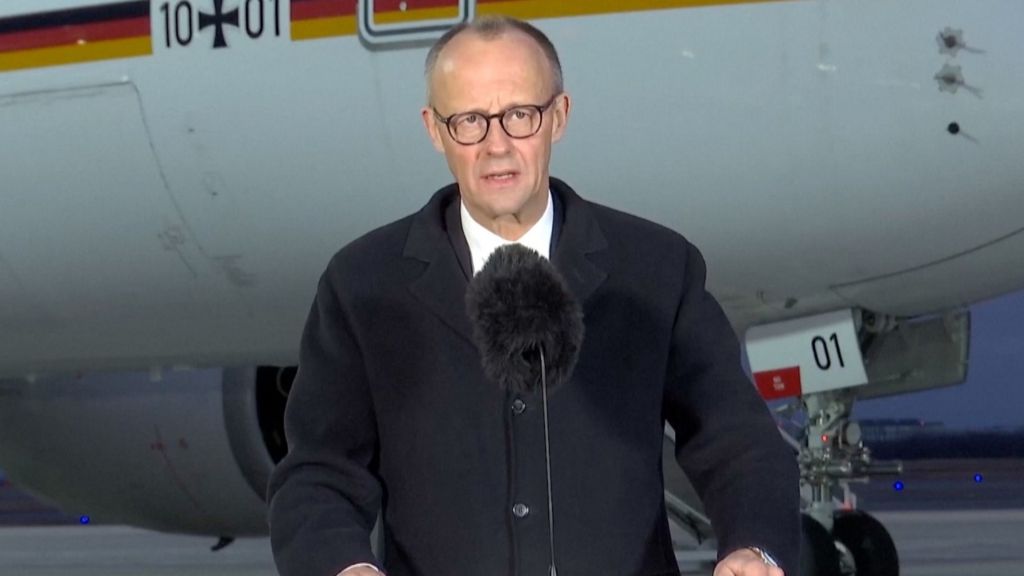
German Chancellor Friedrich Merz arrived in Beijing on Tuesday facing mounting pressure from domestic industries to address a record trade deficit with China, now standing at nearly €90 billion. This inaugural visit comes amid growing alarm from German business leaders who warn that the massive imbalance is fundamentally eroding the nation’s industrial core.
Official statistics reveal a stark contrast in trade flows: German imports from China surged 8.8% in 2025 to €170.6 billion, while exports to China declined 9.7% to €81.3 billion. This widening gap has solidified China’s position as Germany’s top trading partner, surpassing the United States, but at a concerning cost to Europe’s largest economy.
Jürgen Matthes, Head of International Economic Policy at the German Economic Institute, attributes this imbalance to what he describes as “massive Chinese subsidies” and currency undervaluation. “These price advantages cannot just come from more innovation and efficiency,” Matthes stated, highlighting how Chinese manufacturing overcapacity and deflationary pressures are creating what economists term a new “China shock” for European industries.
The visit carries significant geopolitical dimensions beyond trade. Chancellor Merz is expected to urge Chinese leadership to leverage its influence with Moscow to help resolve the ongoing conflict in Ukraine. However, the substantial business delegation accompanying him signals that economic concerns will dominate the agenda.
Germany’s automotive, machinery, and chemical sectors—traditional pillars of its economy—are particularly vulnerable to what industry federations describe as “distortions” in competition. The Federation of German Industries has specifically called for addressing export controls on critical rare earths, while engineering groups advocate for restoring “fair competitive conditions.
This tension represents a strategic challenge to Germany’s longstanding “change through trade” approach with authoritarian nations. While Merz emphasized that Germany would continue its “de-risking” policy rather than pursue full decoupling, the visit underscores a fundamental reassessment of economic dependencies that have accumulated over decades of deepening ties.