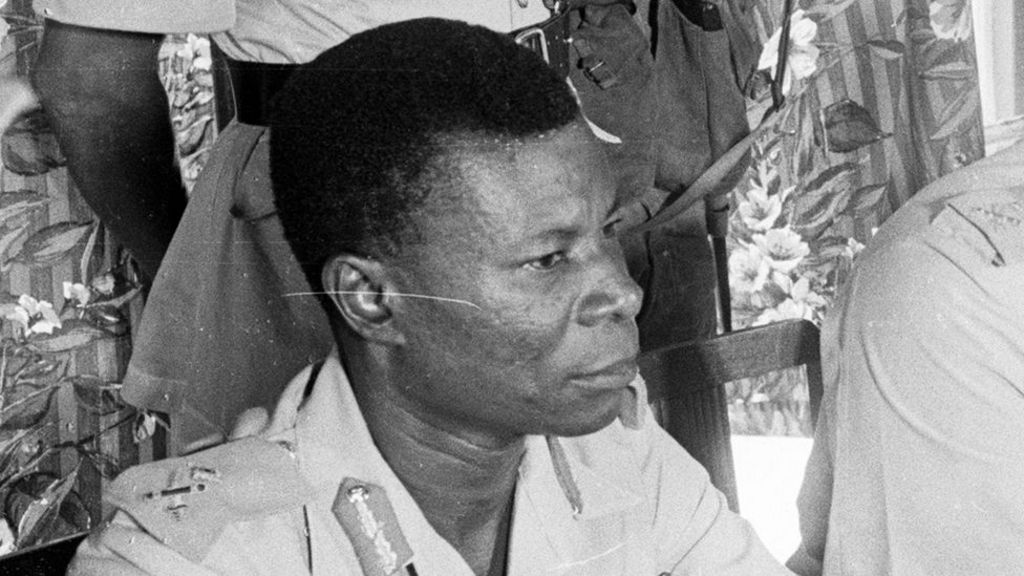
In a landmark decision marking the 60th anniversary of Ghana’s first coup, the government has officially removed the name of military leader Emmanuel Kwasi Kotoka from the nation’s primary aviation hub. The facility will revert to its original designation as Accra International Airport, shedding the controversial homage to the officer who overthrew founding president Kwame Nkrumah in 1966.
The transport ministry defended the move as necessary to project a neutral national image that aligns with Ghana’s democratic values, emphasizing that the change reflects the capital city’s identity rather than memorializing a figure associated with unconstitutional power seizure. Minister Joseph Bukari Nikpe stated the renaming aims to present Ghana as a stable democracy focused on unity rather than divisive historical figures.
However, the decision has ignited intense debate across Ghanaian society. Kotoka’s family and political representatives from his native Volta Region condemn the erasure of his legacy, arguing it diminishes regional representation in national symbols. Minority Leader Alexander Afenyo-Markin characterized the move as a betrayal of eastern Ghana’s contributions to national history.
Civil society organizations supporting the change maintain that honoring a coup leader fundamentally contradicts constitutional governance principles. This perspective has gained prominence under President John Mahama’s administration, which returned to power through democratic elections in December 2024.
The controversy extends beyond historical reinterpretation to practical concerns, with critics questioning the allocation of resources to symbolic changes amid pressing issues like unemployment and living standards. Social media platforms have become arenas for vigorous debate about the legal, social, and political implications of recontextualizing historical figures.
Authorities assure the public that operational aspects—including safety standards and international travel protocols—remain unaffected by the nomenclature adjustment. The government has called for public cooperation to ensure a seamless transition while acknowledging the complex historical narratives surrounding both Nkrumah’s pan-African visionary leadership and Kotoka’s contested legacy.
Historical context reveals deeper dimensions: Nkrumah’s 1966 ouster occurred amid allegations of authoritarian tendencies, with historians continuing to debate external influences, including possible CIA involvement in destabilizing Ghana’s first president. The airport itself witnessed Kotoka’s death during a failed counter-coup attempt in 1967, adding layers of historical irony to the naming controversy.
This decision reflects Ghana’s ongoing negotiation with its post-colonial identity, balancing reverence for independence achievements with critical reassessment of subsequent political turmoil that included multiple coups before establishing stable multiparty democracy in 1992.