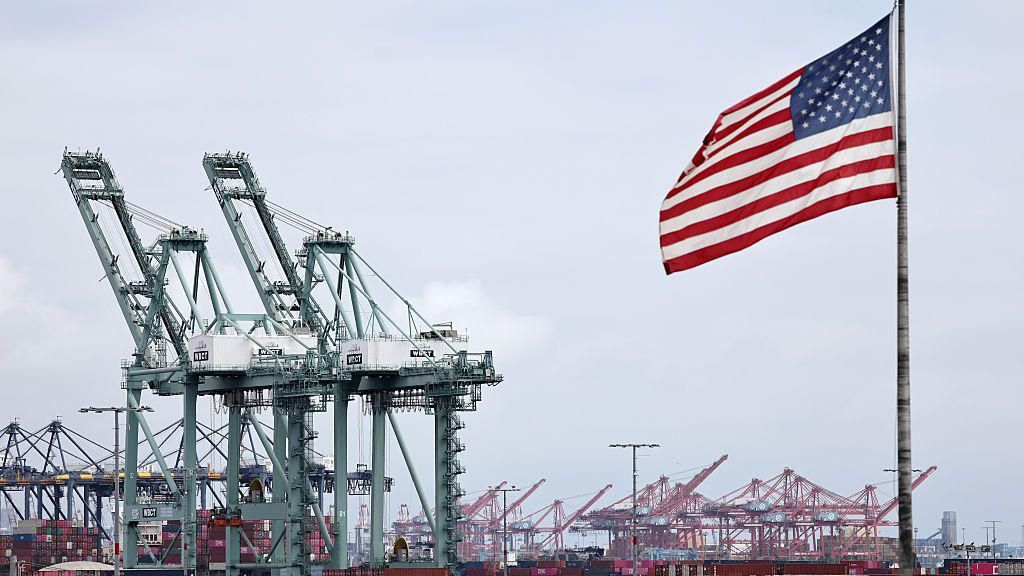
The Trump administration has implemented new global import tariffs at a 10% rate, significantly lower than the president’s previously announced 15% target. This development follows a landmark Supreme Court decision that blocked substantial portions of his earlier sweeping tariff measures.
Official documentation confirms the 10% rate took effect Tuesday without any directive for an immediate increase, despite President Trump’s weekend announcement of a higher 15% levy. The White House has not provided clarification regarding this discrepancy.
Financial analysts express growing concern over the rapidly shifting trade policy landscape. Carsten Brzeski, an economist with investment bank ING, characterized the situation as chaotic, noting that businesses now face renewed uncertainty reminiscent of last year’s trade tensions. He warned of increased retaliation risks from trading partners and a heightened probability of a full-scale trade war escalation.
The administration justifies these temporary tariffs under Section 122 of the 1974 Trade Act, which permits presidential imposition of import duties for 150 days without congressional approval. An executive order signed Friday stated the measures aim to address “fundamental international payments problems” and rebalance trade relationships to benefit American workers, farmers, and manufacturers.
Paradoxically, the latest trade data reveals America’s trade deficit reached approximately $1.2 trillion (£890bn) last week, widening by 2.1% compared to 2024 figures. This occurs alongside revelations that the US has already collected at least $130 billion in tariffs using the 1977 International Emergency Economic Powers Act.
International reaction has been swift and concerned. The United Kingdom indicated reciprocal actions remain “off the table” if the US fails to honor existing tariff agreements, while simultaneously emphasizing that “no one wants a trade war.” The European Union has suspended ratification of a recently negotiated trade deal, with European Parliament official Brando Benifei calling for collective action among nations dissatisfied with US trade treatment. India has deferred scheduled talks to finalize a recent agreement, further illustrating the global unease surrounding US trade policy unpredictability.