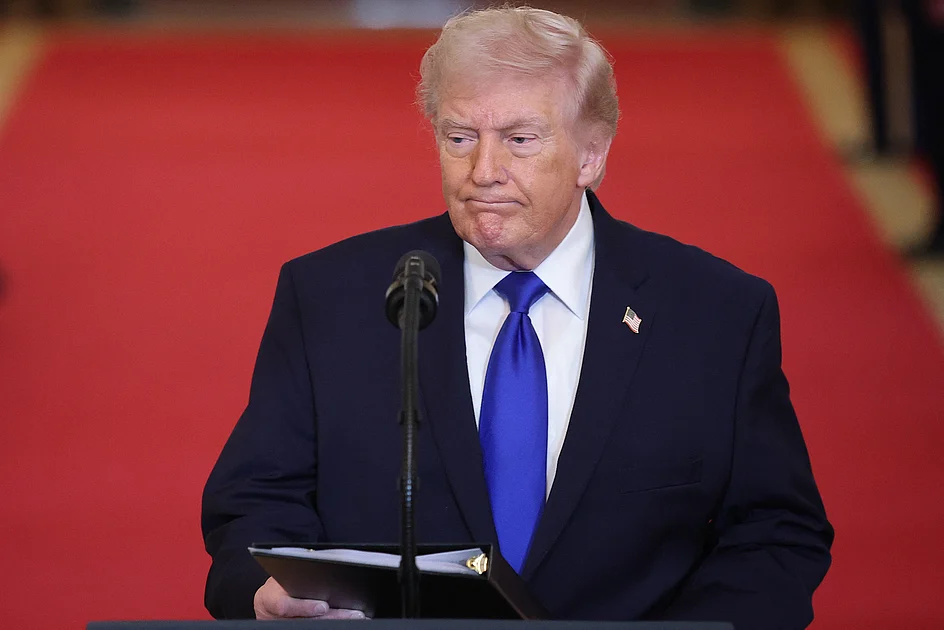
A new era in U.S. trade policy commenced Tuesday as President Donald Trump’s administration implemented comprehensive 10% tariffs on imported goods, responding to a landmark Supreme Court decision that invalidated substantial portions of his previous global tariff regime. The ruling, delivered Friday by a 6-3 conservative-majority court, determined that Trump had overstepped presidential authority using a 1977 statute to impose arbitrary duties on individual nations.
The freshly enacted tariffs, affecting approximately $1.2 trillion worth of annual imports representing 34% of total goods entering the United States, function as a temporary 150-day measure unless extended by Congressional approval. White House officials justify the policy as necessary to address “large and serious United States balance-of-payments deficits.” Trump has already signaled intentions to escalate the tariff rate to 15%, while maintaining exemptions for goods covered under sector-specific investigations and the US-Mexico-Canada trade agreement.
According to Tax Foundation analysis provided by Vice President of Federal Tax Policy Erica York, the tariff structure imposes significant financial burdens on American households—averaging $1,000 per household in 2025, with projections indicating $700 per household in 2026 despite the court’s rejection of previous tariffs implemented under the International Emergency Economic Powers Act.
The Supreme Court’s decision preserves Trump’s sector-specific tariffs on commodities like steel and automobiles while triggering complex refund proceedings for invalidated duties. U.S. Customs and Border Protection simultaneously ceased collection of court-rejected tariffs while implementing the new 10% levy effective Tuesday.
Trade experts interpret the administration’s response as strategic adaptation to judicial constraints. Wendy Cutler, former U.S. trade official and current Asia Society Policy Institute senior vice president, noted: “With his tariff wings clipped, Trump needs a new tool to express displeasure at actions by others. Threatening steep licensing fees is an alternative, but it lacks the flair and quantitative nature of tariffs.”
Trump maintains an assertive posture, claiming the Supreme Court ruling provided “far more powers and strength” while threatening escalated tariffs against nations that “play games” following the decision. The administration continues to leverage trade pressure as diplomatic tool, with U.S. Trade Representative Jamieson Greer emphasizing expectations that partners honor existing agreements despite the legal upheaval.
Analysts warn that such approaches risk accelerating global efforts to diversify trade relationships away from United States dependence, potentially undermining long-term American economic influence despite short-term protectionist gains.