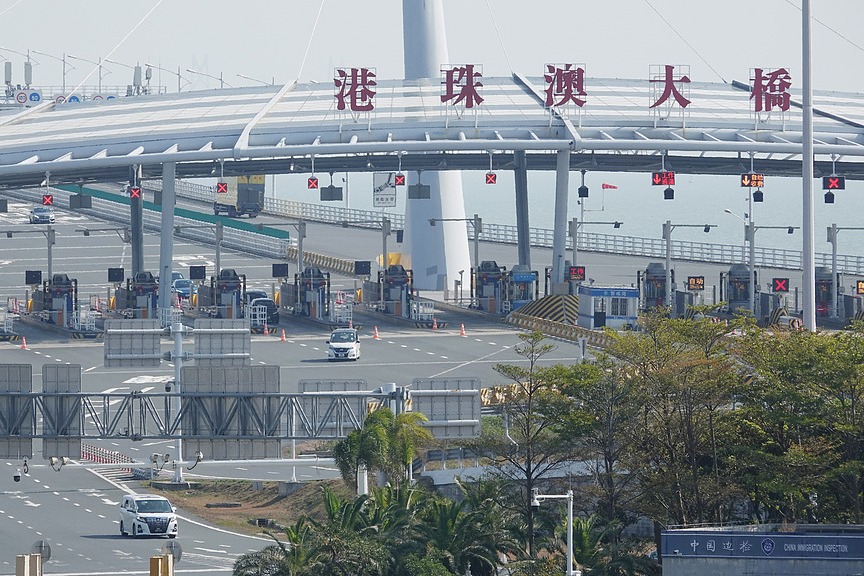
The Hong Kong-Zhuhai-Macao Bridge, the world’s longest sea-crossing bridge, has experienced unprecedented traffic volumes during the recent Spring Festival period, recording three consecutive days of record-breaking vehicle movements. On February 24-26, 2026, the infrastructure marvel witnessed daily traffic figures reaching 27,000, 27,100, and ultimately peaking at 29,500 trips respectively.
This remarkable surge stems from a significant increase in bidirectional tourism between mainland China and the special administrative regions of Hong Kong and Macao. Official data from Guangdong’s transportation authorities reveals that during the first seven days of the nine-day holiday period, the bridge accommodated over 161,000 vehicle crossings, representing a substantial 20% increase compared to the previous year.
The increased traffic patterns reflect the successful implementation of cross-boundary vehicle programs initiated in 2023 and late 2025. These policies permit single-license vehicles from Hong Kong and Macao to access Guangdong province, while conversely enabling mainland vehicles to enter Hong Kong’s urban areas. During the festival, northbound vehicles from Hong Kong constituted more than half of total bridge traffic, with Saturday alone seeing over 15,300 such trips.
For many families, this marked the first extended holiday period since the implementation of the latest travel facilitation measures. Guangzhou resident Mr. Wang, who secured his travel quota two weeks in advance, noted the enhanced flexibility for family travel that personal vehicle transportation provides.
The bridge has simultaneously served as a major tourist attraction in its own right, with immigration authorities reporting approximately 10,000 participants in dedicated bridge tours during the holiday period. Meanwhile, the infrastructure has facilitated over 372,000 trips by residents from Hong Kong and Macao visiting family and enjoying short excursions in Guangdong.
Transportation expert Gary Zhang Xinyu, former chairman of the Hong Kong Legislative Council’s rail transport subcommittee, described the traffic increase as “remarkably significant, even somewhat unexpected.” He emphasized that the phenomenon demonstrates both the substantial potential for cross-boundary travel and the powerful impact of policy measures on stimulating tourism demand and transforming travel patterns within the Greater Bay Area.