The United States military is poised to complete its withdrawal from Syrian territory within the next month, according to multiple anonymous sources familiar with the matter. This development marks a significant shift in the regional security architecture nearly twelve years after American forces first intervened against the Islamic State group.
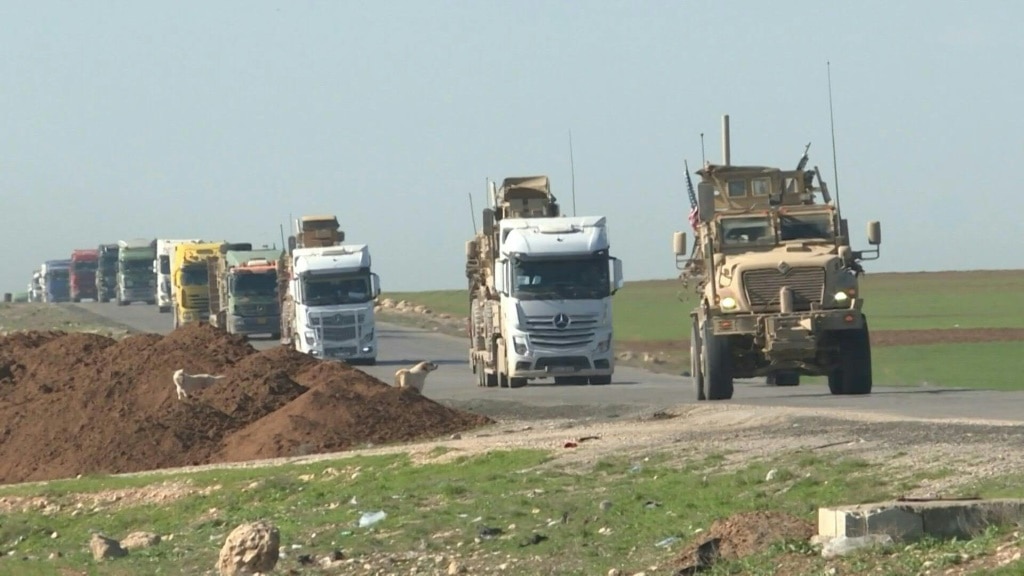
Convoys of US military vehicles have been observed moving along highways outside Qamishli, transporting armored vehicles and prefabricated structures from key bases. The withdrawal process has accelerated in recent weeks, with American forces already vacating strategic positions at Al-Tanf in southeastern Syria and Shadadi in the northeast.
The phased departure coincides with Damascus expanding its administrative control over northeastern regions previously governed by US-aligned Kurdish forces. This territorial consolidation follows last month’s agreement between Kurdish authorities and the Syrian government to integrate their institutions.
Security concerns persist despite these geopolitical realignments. Islamic State remnants demonstrated their ongoing threat capability with a recent attack in Raqa that killed four Syrian security personnel. While territorially defeated in 2019, IS maintains operational sleeper cells and recently issued calls for intensified attacks against Syrian authorities.
The approximately 1,000 remaining US troops will complete their exit within 20-35 days, according to various sources. A diplomat from a US-allied country indicated that American air operations might continue from regional bases despite the ground force withdrawal.
Concurrently, humanitarian challenges emerge as Syria assumes control of detention facilities previously managed by Kurdish forces. The transfer of thousands of IS suspects to Iraqi custody and the chaotic dissolution of the al-Hol camp—which housed relatives of suspected militants—have raised concerns among international observers. Human Rights Watch has highlighted the precarious situation of approximately 8,500 individuals, mostly women and children detained without charge, whose countries have failed to facilitate repatriation.