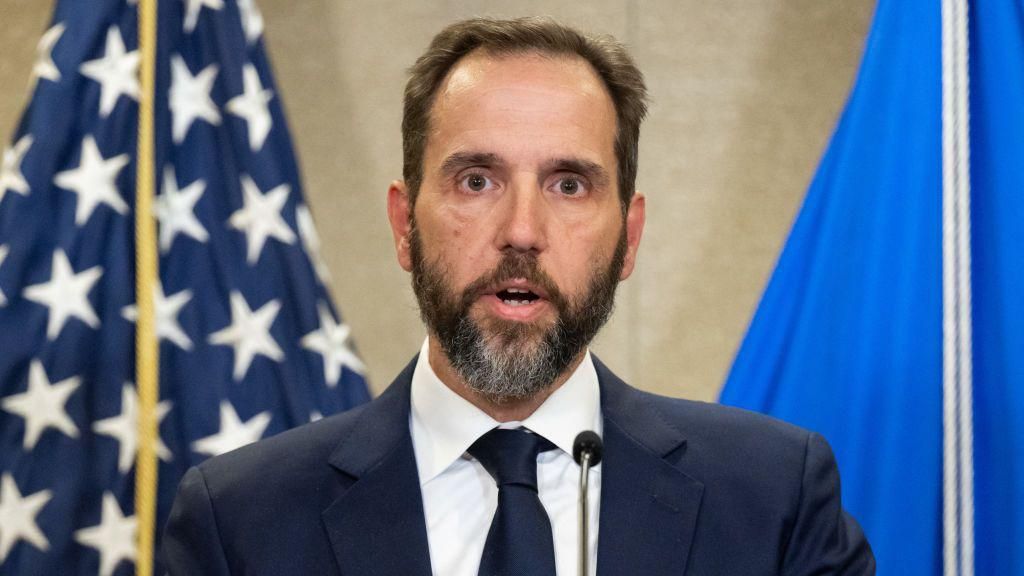
In a significant legal development, U.S. District Judge Aileen Cannon has issued a permanent injunction preventing the public release of Special Counsel Jack Smith’s comprehensive report on his investigation into former President Donald Trump’s handling of classified documents. The ruling came in response to a request from President Trump’s legal team seeking to shield the detailed findings from public view.
Judge Cannon, who was appointed to the bench by Trump himself, determined that releasing the investigative report would result in “irreparable damage” to the former president and would fundamentally “contravene basic notions of fairness and justice.” The document in question chronicles Smith’s two-year probe into allegations that Trump improperly retained sensitive defense materials at his Mar-a-Lago estate after leaving the White House in 2021.
The case originated in 2023 when Trump faced charges of illegally retaining classified defense information, but the prosecution was ultimately dismissed following Trump’s re-election to the presidency. Judge Cannon had previously granted a motion to dismiss the federal case in 2024, ruling that the Justice Department’s appointment of Smith as special counsel was unconstitutional, thereby invalidating his authority to bring charges.
The investigation revealed that dozens of classified documents were discovered in various locations throughout Trump’s Florida residence, including a shower area and storage rooms. Smith, initially appointed by former Attorney General Merrick Garland, first appealed the dismissal but subsequently requested the case be dropped entirely in 2024, acknowledging that Justice Department regulations prohibit prosecuting a sitting president.
In her Monday ruling, Cannon emphasized that Smith had been “acting without lawful authority” when he initially charged Trump, and noted that the defendants “still enjoy the presumption of innocence held sacrosanct in our constitutional order.” A representative from Trump’s legal team praised the decision, stating that broad disclosure of materials from a dismissed criminal case, along with “unproven accusations by an unconstitutional prosecutor, has no place in the American judicial system.”