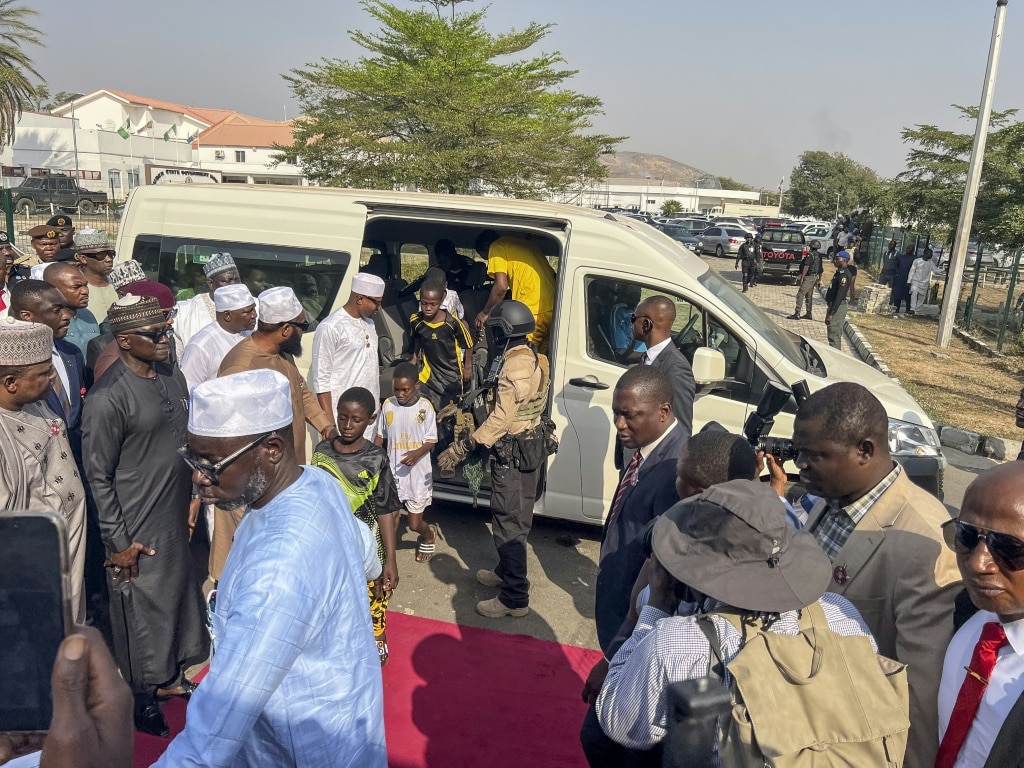
Intelligence sources have revealed that Nigerian authorities conducted a clandestine multi-million dollar ransom payment to Boko Haram militants in exchange for the release of approximately 230 students and staff abducted from St. Mary’s Catholic boarding school in November. The transaction, which directly contradicts Nigeria’s official policy against negotiating with kidnappers, involved both financial compensation and the release of two high-ranking Boko Haram commanders.
According to three separate intelligence officials who spoke on condition of anonymity, a substantial cash ransom was transported via helicopter to Boko Haram’s stronghold in Gwoza, northeastern Borno State. The payment was delivered to Ali Ngulde, a prominent militant commander operating along the Cameroon border. Due to communication limitations in the remote region, Ngulde reportedly crossed into neighboring Cameroon to verify receipt of the funds before authorizing the initial release of 100 captives.
The mass abduction, initially not attributed to Boko Haram, is now confirmed to have been orchestrated by Sadiku, one of the organization’s most feared commanders. Sadiku previously masterminded the devastating 2022 attack on the Abuja-Kaduna train service, which resulted in substantial ransom payments for wealthy passengers including bankers and government officials.
Despite categorical denials from Nigerian security agencies, four independent intelligence sources maintain that the government sanctioned a ‘huge’ ransom payment ranging between 40 million naira per captive or approximately two billion naira overall. The National Security Advisor’s office, led by Nuhu Ribadu who supervised negotiations, declined repeated requests for comment.
This incident occurs against a complex geopolitical backdrop, with former U.S. President Donald Trump applying diplomatic pressure regarding Christian persecution in Nigeria. However, analysts note that Muslims constitute the majority of kidnapping victims in Nigeria’s multifaceted security crisis.
The ransom payment controversy highlights Nigeria’s ongoing struggle with what experts describe as a ‘structured kidnap industry.’ According to recent data from SBM Intelligence, armed groups extracted approximately $1.66 million between July 2024 and June 2025 alone. Despite 2022 legislation imposing 15-year prison sentences for ransom payments, the practice continues unabated, with security personnel occasionally acting as intermediaries between families and kidnappers.
The crisis has normalized crowdfunding initiatives among affected families, with recent online campaigns seeking substantial sums for hostage release. This case exemplifies the difficult balance between official policy and practical resolution in Nigeria’s persistent security challenges.