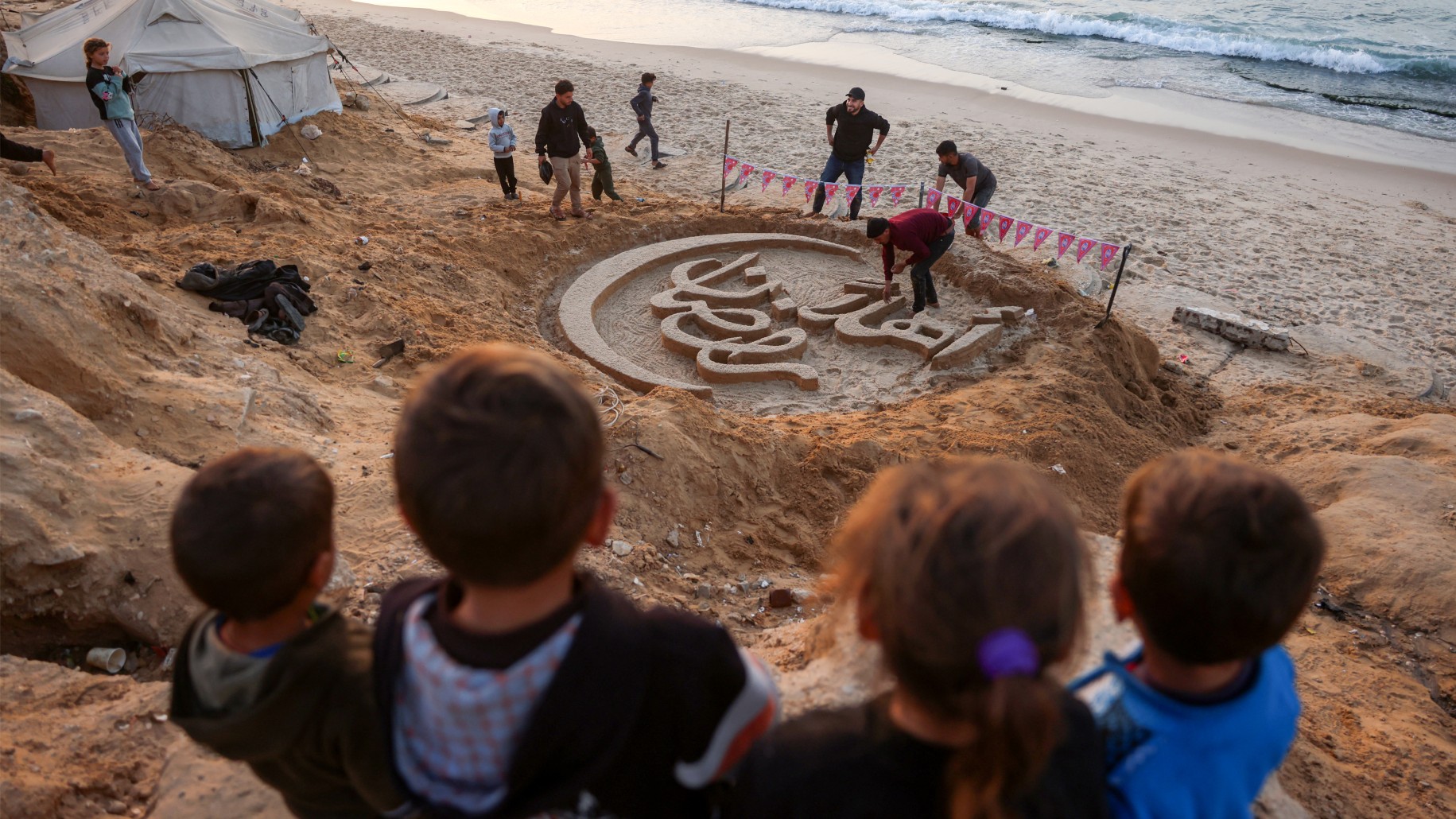
The commencement of Ramadan has offered minimal respite for Palestinians in Gaza, where a fragile ceasefire masks persistent suffering and profound loss. While international leaders gathered in Washington to discuss reconstruction pledges through President Trump’s Board of Peace initiative, Gaza’s residents describe an atmosphere saturated with grief, displacement, and intermittent violence—conditions strikingly similar to the two wartime Ramadans that preceded it.
The current ceasefire, reminiscent of a collapsed January agreement breached by Israel last year, leaves many uncertain about future stability. Families of the more than 72,000 Palestinians killed since October 2023 now confront Ramadan amidst shattered communities and absent loved ones.
Ziad Dhair, displaced from northern Gaza and sheltering in Nuseirat refugee camp, encapsulates the prevailing sentiment: ‘There is no real difference between Ramadan now and Ramadan during the war. The only difference is that some of the killing and bloodshed has stopped.’ For Dhair, the holy month is defined by absence—’We have lost the gatherings of the people we love.’
Despite reduced large-scale operations, violence persists. Two Palestinians were killed and four injured during Ramadan’s initial days, adding to the 603 fatalities and 1,618 injuries recorded since the October ceasefire. Most casualties occur near the Israeli-enforced ‘Yellow Line’—a military buffer zone now controlling 58% of Gaza—where access remains restricted despite ceasefire provisions.
The human cost extends beyond casualties. Umm Mohammed Abu Qamar, forcibly displaced from Jabalia refugee camp after two Ramadans in her damaged home, now observes the holy month in a central Gaza tent. ‘I miss my home, I miss Jabalia. I long to return and smell its soil,’ she mourns, while grieving two sisters and two sons-in-law killed in Israeli attacks.
Fouad Hijazi of Gaza City describes tearful Ramadan preparations, remembering 20 lost friends and relatives. His experience reflects broader economic collapse: although markets are restocked, widespread unemployment and inflation render goods unattainable for most. ‘We see them but cannot buy them for our children,’ Hijazi explains, noting dependence on charity kitchens that provide cold meals requiring firewood reheating.
This energy crisis persists despite ceasefire agreements promising 1,500 gas trucks by January; only 307 arrived, covering 20% of needs. Consequently, firewood remains the primary cooking fuel, maintaining wartime conditions.
Ultimately, Gaza’s Ramadan embodies paradoxical suffering: reduced bombardment without safety, available goods without accessibility, and ceasefire without freedom. As Dhair summarizes, ‘The war cannot have stopped when I am still unable to even see the rubble of my home.’