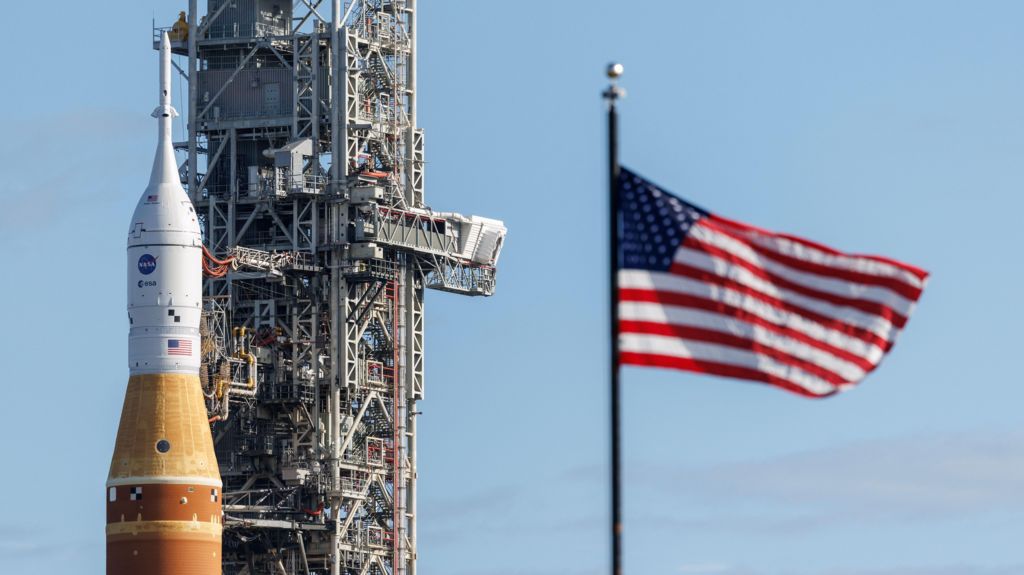
NASA has announced a likely postponement of its highly anticipated Artemis II lunar mission, originally scheduled for early March, after engineers identified a critical technical issue during safety checks. The problem involves an interruption in the helium flow system, which is essential for pressurizing fuel tanks and cooling rocket components during launch operations.
The space agency had previously targeted March 6th for the historic launch that would send astronauts to the Moon for the first time in five decades. The mission, planned as a 10-day journey to the far side of the Moon and back, would represent humanity’s deepest venture into space to date.
During an extensive 50-hour fueling operation at Florida’s Kennedy Space Center on Thursday, teams successfully loaded approximately 730,000 gallons of propellant into the rocket system without initial complications. However, engineers monitoring the systems overnight Friday observed the concerning helium flow interruption that has now jeopardized the March launch window.
NASA Administrator Jared Isaacman confirmed the development on Saturday, stating the issue would ‘almost assuredly impact the March window.’ The Artemis II crew includes U.S. astronauts Reid Wiseman, Victor Glover, and Christina Koch, along with Canadian astronaut Jeremy Hansen, who were preparing to conduct close-range studies of the lunar surface.
The successful completion of Artemis II is considered a crucial stepping stone toward Artemis III, which aims to land astronauts on the lunar surface by 2028—a timeline NASA acknowledges as ambitious. This latest technical setback follows previous challenges with filters and seals that caused hydrogen leaks, which engineers had already addressed in earlier modifications.