In a dramatic escalation of tensions between the executive and judicial branches, President Donald Trump has announced a new 10% universal tariff immediately following a landmark Supreme Court ruling that struck down his previous global trade measures. The 6-3 decision, which found the president had exceeded his authority, represents one of the most significant judicial checks on presidential power in recent history.
The court’s majority opinion, authored by Chief Justice John Roberts, determined that the International Emergency Economic Powers Act of 1977—cited by the administration as legal justification—contained no explicit congressional delegation of tariff-setting authority. ‘When Congress has delegated its tariff powers, it has done so in explicit terms and subject to strict limits,’ Roberts wrote, joined by the court’s three liberal justices and two Trump-appointed conservatives, Amy Coney Barrett and Neil Gorsuch.
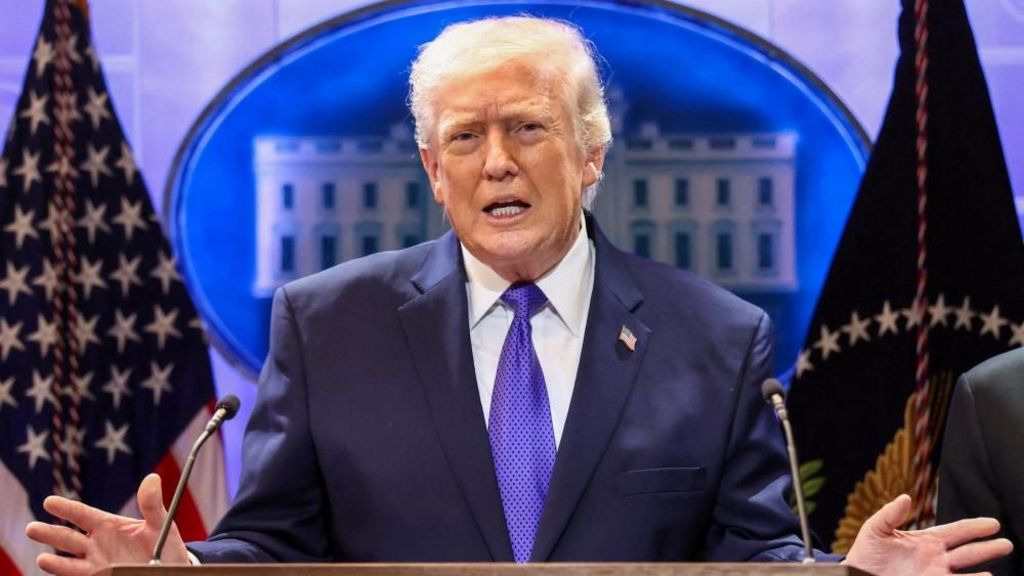
Speaking from the White House briefing room, Trump delivered an extraordinary rebuke of the judicial branch, characterizing the decision as ‘terrible’ and labeling dissenting Republican-appointed justices as ‘fools and lap dogs’ who demonstrated ‘unpatriotic and disloyal’ behavior. The president vowed to continue his trade policy through alternative legal mechanisms, including Section 122—a rarely invoked statute allowing temporary tariffs of up to 15% for 150 days without congressional approval.
The ruling triggered immediate market reactions, with the S&P 500 gaining 0.7% as business leaders expressed relief. Beth Benike, owner of Minnesota-based Busy Baby products, described feeling ‘like a thousand-pound weight has been lifted off my chest,’ while Terry Precision Cycling CEO Nik Holm called the decision a ‘relief’ despite anticipating lengthy supply chain recovery.
Legal experts warned that the path to tariff refunds—estimated at $130 billion already collected under the invalidated program—remains fraught with complexity. Diane Swonk, chief economist at KPMG US, cautioned that litigation costs could prevent smaller firms from recouping funds, while trade analyst Geoffrey Gertz noted the situation had ‘only gotten more complicated and more messy.’
The administration indicated that even nations with existing trade agreements, including the UK, EU, and India, would now face the new universal levy, though officials expect these countries to maintain previously negotiated concessions. European Commission spokespersons stated they were ‘analyzing the ruling carefully’ amid concerns about renewed trade uncertainty.
This constitutional clash sets the stage for prolonged legal battles and potentially far-reaching implications for presidential authority in international trade matters.