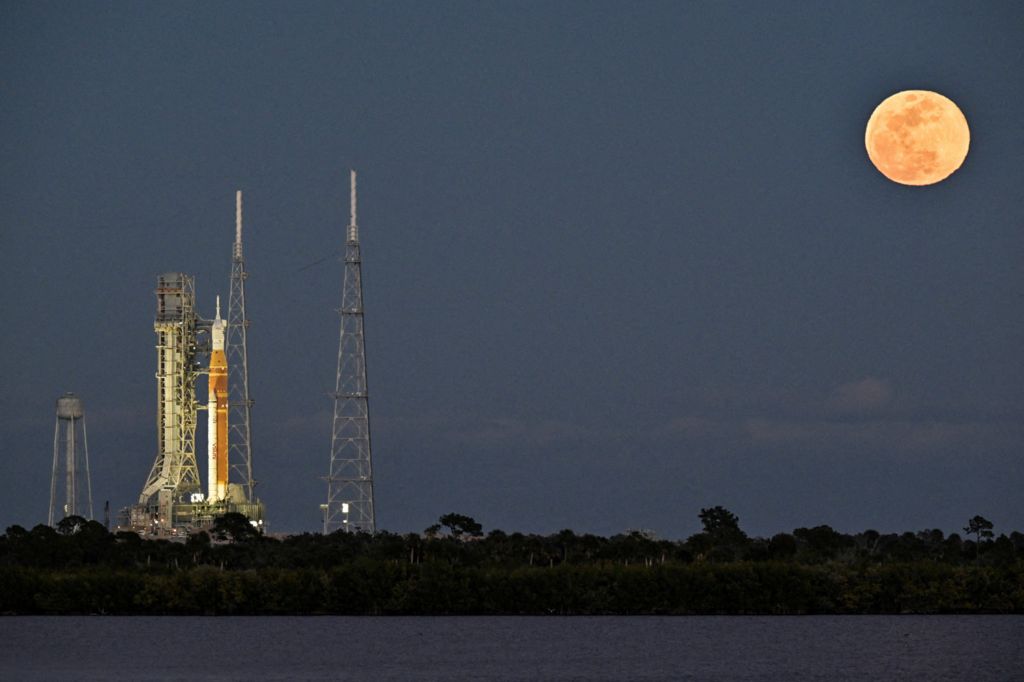
NASA has officially scheduled early March for humanity’s most distant space voyage in over half a century, marking a pivotal moment in space exploration history. The Artemis II mission will launch four astronauts on a groundbreaking 10-day journey around the far side of the Moon and back to Earth, setting the stage for subsequent lunar landings.
The space agency confirmed March 6 (March 7 UK time) as the earliest launch window following a successful ‘wet dress rehearsal’ at Florida’s Kennedy Space Center. This critical pre-launch test involved fully fueling the Space Launch System (SLS) rocket and executing complete countdown procedures. The achievement comes after an earlier February rehearsal was abbreviated due to a hydrogen fuel leak, with NASA officials confirming all technical issues involving seals and filters have been comprehensively resolved.
‘Every night I look up at the Moon and feel her calling us—and we’re ready,’ declared NASA’s Lori Glaze during a recent press briefing. ‘The excitement for Artemis II is genuinely building momentum as we approach launch readiness.’
The international crew comprises NASA astronauts Reid Wiseman, Victor Glover, and Christina Koch alongside Canadian Space Agency astronaut Jeremy Hansen. These spacefarers will embark aboard the 98-meter-tall SLS rocket—NASA’s most powerful launch vehicle—which previously completed an uncrewed test flight in November 2022 during the Artemis I mission.
During their expedition, the crew will reside within the Orion capsule’s minibus-sized interior, conducting scientific observations and capturing unprecedented imagery while orbiting 6,500-9,500 kilometers above the lunar far side. Following their lunar flyby, the astronauts will commence a four-day return journey culminating in a Pacific Ocean splashdown.
This milestone mission directly enables Artemis III, which aims to land astronauts on the lunar surface by 2028. However, NASA faces significant challenges as SpaceX’s Starship lunar lander development experiences delays, prompting the agency to solicit alternative acceleration proposals from both SpaceX and Blue Origin. This urgency is compounded by growing international competition, particularly from China’s planned 2030 lunar landing mission, with both nations targeting the Moon’s strategically valuable south pole for future base establishments.