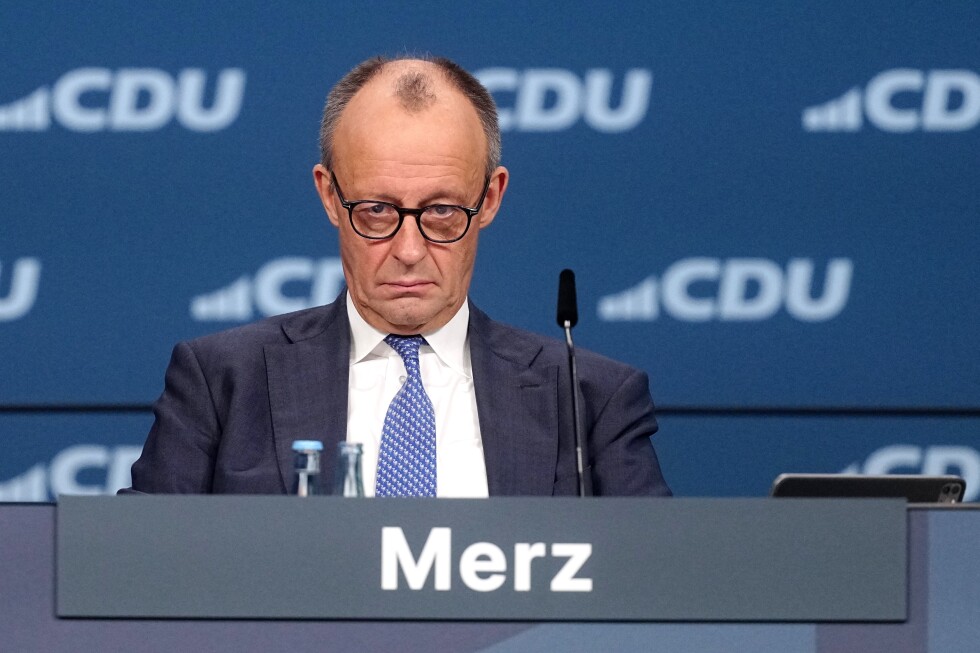
BERLIN — In a significant diplomatic move, German Chancellor Friedrich Merz is scheduled to undertake his inaugural visit to China since assuming leadership of Europe’s largest economy. The high-stakes visit, set for next week, comes as Germany navigates an increasingly complex international landscape dominated by assertive global powers.
Government spokesperson Sebastian Hille confirmed on Friday that Chancellor Merz will engage in high-level meetings with Chinese Premier Li Qiang and Chinese leader Xi Jinping in Beijing on Wednesday, followed by a visit to Hangzhou in southeastern China. The diplomatic mission carries the thematic focus of ‘competition,’ with officials emphasizing the critical need to strike an appropriate balance in cooperation with the Asian superpower.
‘We seek cooperation where it is necessary and aligns with our mutual interests,’ Hille stated during a press briefing in Berlin, outlining Germany’s nuanced approach to Sino-German relations.
This diplomatic engagement occurs against the backdrop of Germany’s delicate balancing act in recent years—maintaining robust ties with China while expressing concerns over Beijing’s growing assertiveness and its stance regarding Russia’s invasion of Ukraine. Simultaneously, Berlin has pursued strategic diversification of its commercial partnerships and supply chains to avoid excessive reliance on Chinese trade.
Recent economic data from Germany’s Federal Statistical Office reveals China reclaimed its position as Germany’s primary trading partner in the previous year, with bilateral trade reaching 251.8 billion euros ($297 billion). This development marks a significant shift, as the United States had briefly displaced China from this position in 2024. Trade with China demonstrated growth during this period, while commercial exchanges with the U.S. declined to 240.5 billion euros.
Addressing his Christian Democratic Union party convention in Stuttgart, Chancellor Merz emphasized the necessity of global business connections, explicitly including China. ‘China remains a crucial trading partner for Germany, which is why I will travel to China next week accompanied by a substantial business delegation,’ he stated. Neither the Chancellor nor his spokesperson disclosed specific delegation members.
However, Merz maintained a realistic perspective, cautioning against illusions regarding China’s geopolitical ambitions. He noted that China ‘asserts the claim to define a new multilateral order according to its own rules,’ signaling fundamental shifts in the international landscape.
The Chancellor articulated that the established rules-based order has fundamentally transformed, with ‘a new world order, an order of great powers, taking shape at accelerated pace.’ He stressed Europe’s urgent need to enhance its economic and military capabilities while aggressively pursuing trade agreements with diverse global partners.
This diplomatic development occurs alongside preparations for U.S. President Donald Trump’s anticipated visit to China in April, highlighting the intricate interplay of major power diplomacy in contemporary global affairs.