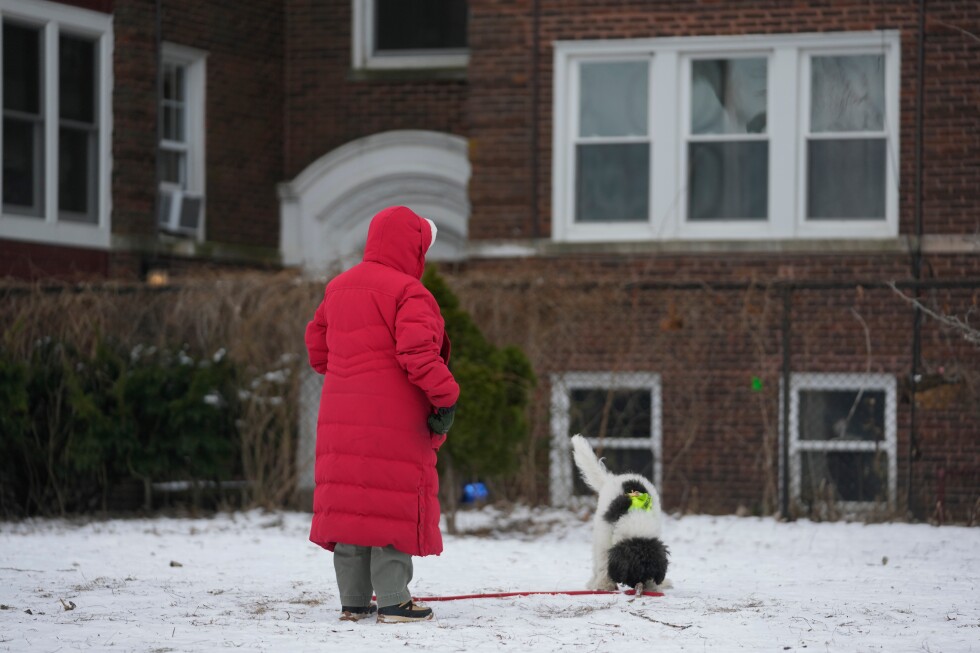
A profound cold snap has seized North America, with millions experiencing what many describe as the most severe winter conditions in decades. The Arctic blast, striking early in 2026, has triggered widespread disruptions across daily life and infrastructure.
Chris Ferro, a Brooklyn-based property owner, reported unprecedented freezing in his Albany residences. “Pipes that never froze on me for 15 years froze,” Ferro noted, describing how subzero temperatures halted renovation projects. While grateful for avoiding burst pipes, he contrasted this deep freeze with the milder winters of recent years.
New data from The Associated Press-NORC Center for Public Affairs Research reveals 60% of U.S. adults have encountered severe cold or winter storms within the past five years—a significant increase from the 50% recorded in February 2025. This surge follows a massive winter storm that crippled the East Coast and caused southern power outages.
The perception of intensifying cold occurs against a backdrop of global warming. Scientific consensus maintains that human-induced climate change has made the first quarter of the 21st century historically warm, with abnormally cold winters becoming increasingly rare in North America. This rarity makes prolonged cold spells feel more intense and unfamiliar, particularly to younger generations.
The practical impacts are substantial: 70% of Americans faced elevated utility bills due to winter conditions, while 40% experienced work or school cancellations. Approximately one-third endured power outages, and 30% suffered travel disruptions.
Annie Braswell of Greenville, North Carolina, saw her utility bills double during what she described as the coldest period in forty years. This starkly contrasted with the extreme heat she endured just months earlier, with temperatures reaching 100°F (38°C).
The political dimension emerges through rising electricity prices, which nearly 40% of Americans cite as a major stressor. Climate activist Bill McKibben predicts significant political repercussions from increasing energy costs.
Regional variations show Midwesterners (60%) most affected by cancellations, followed by Southerners (50%) and Northeasterners (40%), compared to just 15% of Westerners.
The climate change connection remains contentious among Americans. While two-thirds of those experiencing severe weather attribute it to climate change, a stark partisan divide exists: 80% of affected Democrats blame climate change versus only 40% of Republicans.
Scientists explain this apparent paradox: extreme cold outbreaks increasingly result from polar vortex disruptions caused by rapid Arctic warming and diminishing sea ice. As the Arctic warms, the swirling low-pressure system that typically contains cold air stretches southward more frequently.
Overall, 80% of U.S. adults have experienced some form of severe weather in the past five years, with extreme heat and cold being the most commonly reported events.