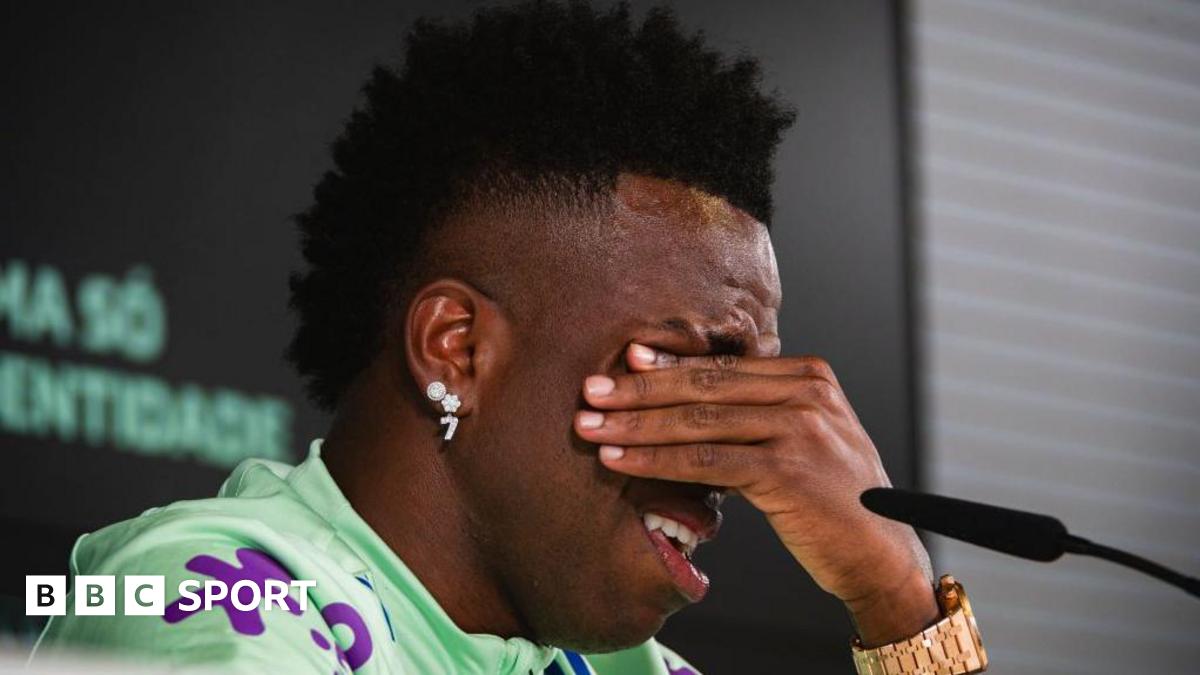
A Champions League playoff match between Benfica and Real Madrid was suspended for ten minutes following Brazilian forward Vinicius Junior’s report of alleged racial abuse from opposing player Gianluca Prestianni. This marks the twentieth documented incident of discrimination against the 25-year-old during his eight-year tenure with Real Madrid, elevating him to a global symbol of resistance against racism in sports.
The incident occurred minutes after Vinicius scored what commentators described as a ‘masterpiece’ goal, with teammate Kylian Mbappé confirming he heard racist slurs uttered five times. Prestianni has denied the allegations.
Benfica manager José Mourinho provoked widespread condemnation by suggesting Vinicius provoked the incident through his celebratory behavior. ‘When you score a goal like that, you celebrate in a respectful way,’ Mourinho stated, further claiming Benfica couldn’t be racist because their legendary player Eusébio was Black.
This response exemplifies what sociologists term ‘racism without racists’ – a cultural framework that shifts blame to victims for their reactions rather than addressing the root discrimination. Vinicius has faced systematic abuse across Spain and Portugal, including monkey chants, hanging effigies, and social media hate campaigns, with many incidents resulting in minimal judicial consequences.
A landmark moment occurred in June 2024 when three Valencia fans received Spain’s first prison sentences for stadium racism. Responding to critics who suggest he should ‘just play football,’ Vinicius declared: ‘I’m not a victim of racism. I am an executioner of racists.’ His continued activism pressures football authorities to strengthen anti-discrimination protocols and enforcement measures.