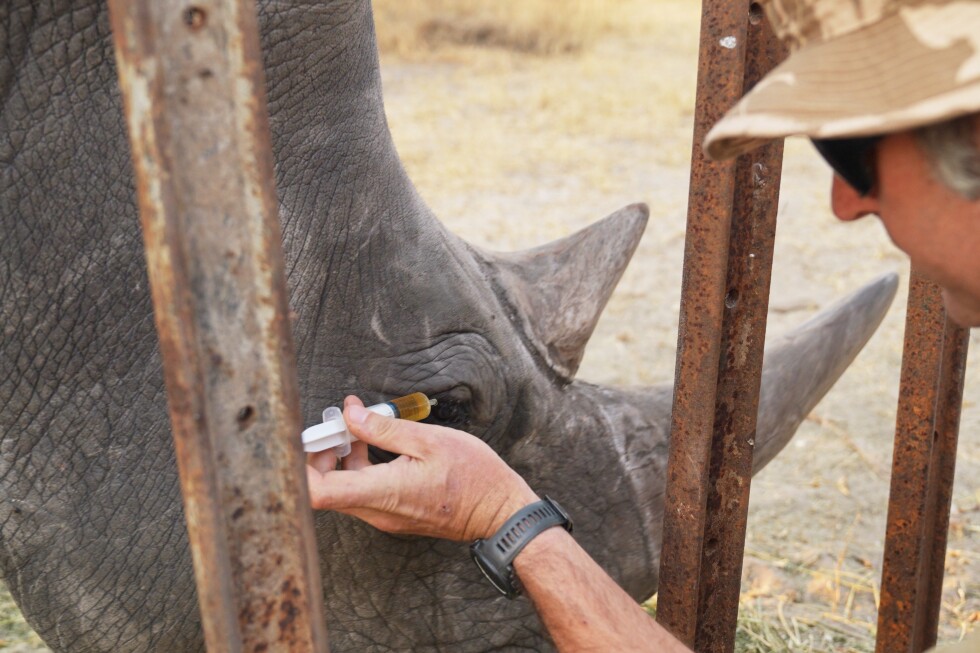
An innovative cross-continental conservation effort has successfully treated a critically endangered white rhinoceros in Zimbabwe using groundbreaking behavioral techniques developed in Florida. The breakthrough came when animal behavior specialists from Precision Behavior partnered with Florida’s Palm Beach Zoo & Conservation Society to address a life-threatening parasitic eye infection affecting a male rhino named Thuza.
The situation emerged as a critical threat to Zimbabwe’s Community Rhino Conservation Initiative, a pioneering program working to reintroduce southern white rhinos to communal lands for the first time in the nation’s history. Thuza’s deteriorating condition—characterized by bleeding eyes and constant rubbing—posed a significant risk to both the animal’s survival and the entire conservation project.
‘We faced a dire scenario where traditional methods proved ineffective,’ acknowledged Daniel Terblanche, security manager with Imvelo Safari Lodges, which supports the conservation initiative. ‘The proposed solution initially appeared completely ridiculous to our team.’
The breakthrough methodology involved training Thuza to voluntarily enter a confined space using his favorite foods as incentive. Through progressive desensitization techniques, the rhino learned to accept human touch and eventually tolerate eyedrop administration. Within two weeks, local anti-poaching scouts mastered the procedure and now administer daily medication.
This success story represents a significant advancement in wildlife conservation, demonstrating how captive animal management techniques can be effectively adapted to wild conservation scenarios. With approximately 16,000 southern white rhinos remaining in the wild—classified as near threatened due to poaching and habitat loss—such innovative approaches become increasingly vital for species preservation.
The collaborative effort between American animal behavior experts and African conservationists has not only saved Thuza’s eyesight but potentially established a replicable model for future wildlife medical interventions across the continent.