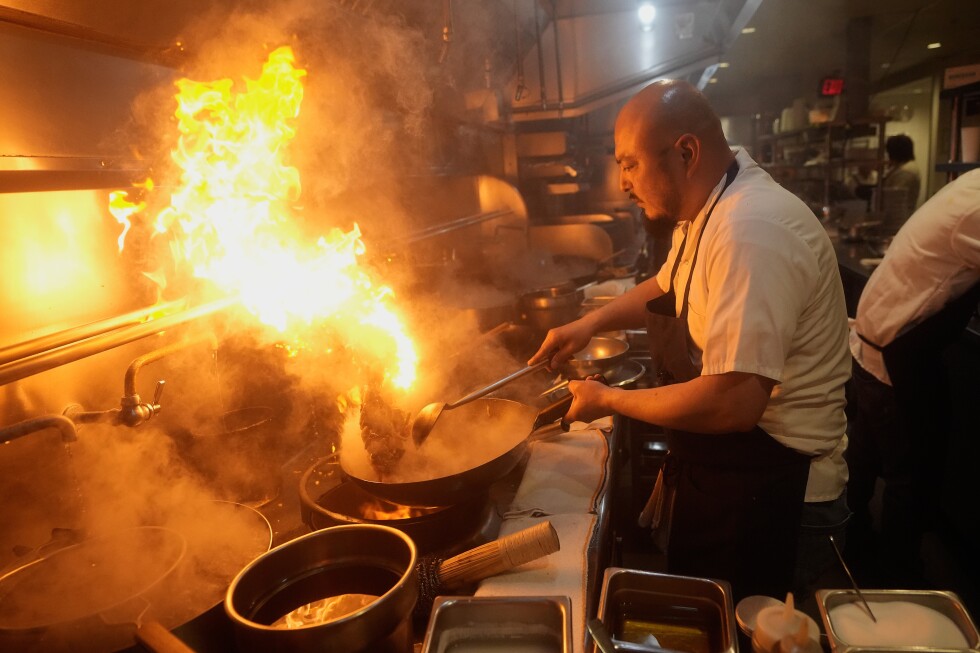
SAN FRANCISCO — The transformation of Chinese cuisine in America represents both a cultural reclamation and a culinary revolution. Taiwan-born chef George Chen, who once concealed his school lunches from mocking classmates, now stands at the helm of China Live—a sophisticated culinary complex showcasing dumpling stations, Peking duck ovens, and artisanal noodle crafts. His journey from childhood embarrassment to culinary authority mirrors a broader movement reshaping perceptions of Chinese gastronomy.
Across the nation, a new generation of chefs is challenging decades-old stereotypes. In New York’s Hell’s Kitchen, Bolun and Linette Yao’s Michelin-starred Yingtao offers a $150 tasting menu celebrating ‘contemporary Chinese’ elegance. Meanwhile, San Francisco’s culinary landscape features establishments like Empress by Boon and Mister Jiu’s, where traditional techniques meet modern presentation.
These chefs confront a persistent bias: the expectation that Chinese food must be inexpensive. ‘Why shouldn’t I charge comparable prices?’ Chen challenges, referencing his $188 tasting menus. ‘Just because we’re in Chinatown?’
The movement draws from deep historical roots. As NYU food studies director Krishnendu Ray explains, Western perceptions of Chinese cuisine have fluctuated with China’s global standing—from coveted luxury goods in the 18th century to stigmatized ‘ethnic food’ during periods of immigration.
Modern practitioners emphasize technical authenticity over fusion. At Empress by Boon, chef Ho Chee Boon maintains four traditional wok stations with equipment imported from Hong Kong. ‘We keep traditional methods but present them modernly,’ he explains. Emily Yuen, Yingtao’s executive chef, reimagines classic dishes like Cantonese egg tarts with caviar and quail eggs while maintaining culinary integrity.
This culinary renaissance represents more than gastronomic innovation—it’s a cultural statement about value, identity, and the evolving place of Chinese culture in American society.