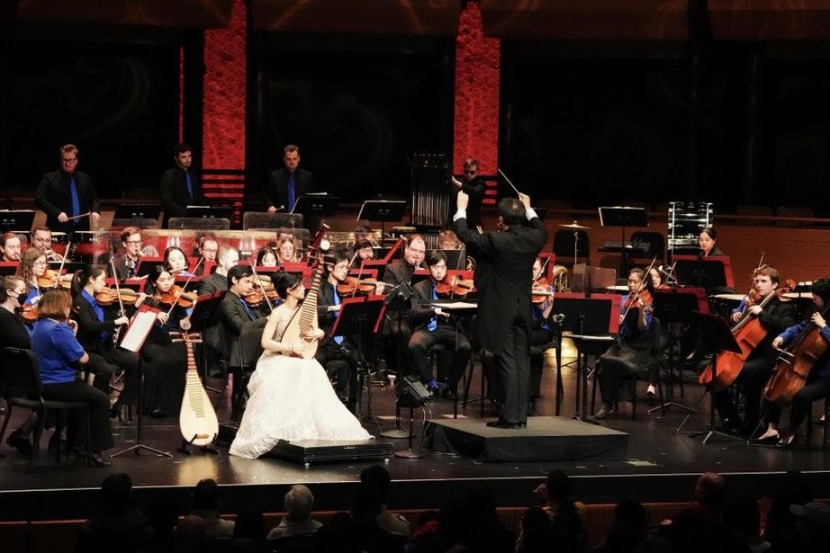
New York’s Jazz at Lincoln Center witnessed a remarkable cultural synthesis on Sunday evening as Chinese and American musicians collaboratively celebrated the Lunar New Year through a harmonious blend of Eastern and Western musical traditions. The seventh annual Sound of Spring Chinese New Year concert, presented by the US-China Music Institute of Bard College Conservatory in partnership with Beijing’s Central Conservatory of Music, attracted over 1,000 attendees for an artistic exploration of the Year of the Horse theme.
Under the baton of Cai Jindong, director of Bard Conservatory’s US-China Music Institute, the performance strategically merged distinctive Chinese instruments including the stringed pipa and reeded suona with Western orchestral arrangements. The concert commenced with the vibrant Spring Festival Overture and progressed through a diverse repertoire featuring both cultural traditions, from the pipa concerto Cloud and Blossom to Western classics including Ride of the Valkyries and Light Cavalry Overture.
The event showcased exceptional young soloists including French horn virtuoso Jin Zhicheng and violinist Luo Chaowen—both laureates of prestigious international competitions—alongside pipa soloist Luo Xiaoyan and suona masters Guo Yazhi and Hiu Man Andrew Chan. The musical journey incorporated Shanxi folk percussion pieces, Western concertos, and contemporary compositions including the symphonic capriccio Xu Beihong.
Midway through the performance, a group of nine children delivered Mandarin renditions of traditional Chinese New Year songs, adding an intergenerational dimension to the cultural celebration. American composer Daniel Asia, reflecting on the performance, noted the distinctive pentatonic foundation of Chinese music and its compelling integration with Western orchestral frameworks. He particularly emphasized the suona’s potential for further cross-cultural experimentation, suggesting intriguing possibilities for Western composers to engage with Chinese instruments beyond traditional aesthetic boundaries.
The concert demonstrated how cultural diplomacy through musical collaboration can transcend political and economic tensions, offering a shared artistic language that celebrates both diversity and unity through thematic exploration of universal symbols like the horse.