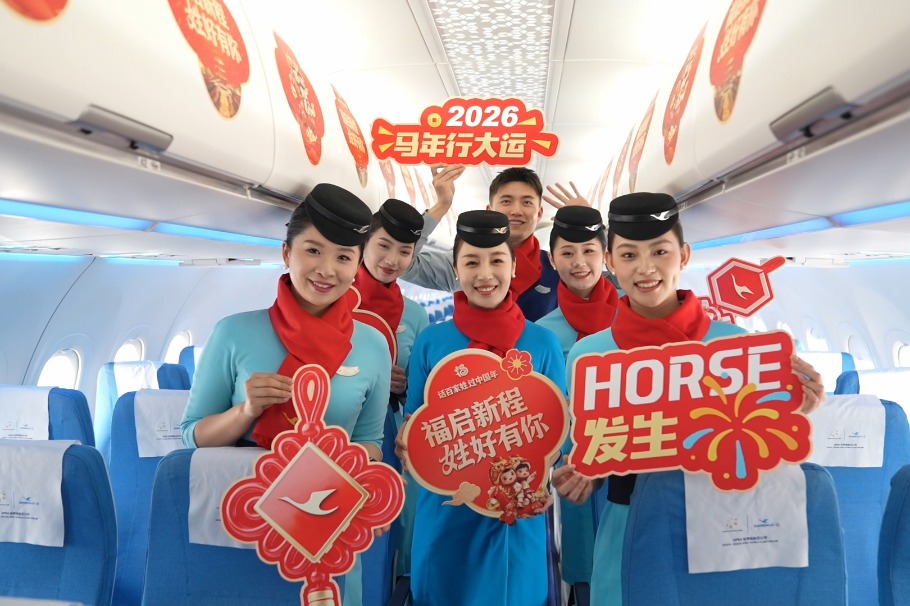
In a groundbreaking cultural initiative, Xiamen Airlines has launched a novel program leveraging Chinese surname heritage to reconnect families divided by the Taiwan Strait. The project emerges as a heartwarming dimension of the Spring Festival travel season, transforming routine journeys into profound cultural rediscoveries.
The airline’s innovative approach centers on familial nomenclature as a powerful connective tissue between mainland China and Taiwan. For centuries, Chinese patronyms have served as enduring cultural codes that transcend geographical and political boundaries. This program actively helps travelers trace their genealogical roots while traveling during China’s most important annual festival.
During the Spring Festival travel rush—the world’s largest annual human migration—participants embark on dual journeys: both physical travel across the Strait and metaphorical journeys into their ancestral past. The initiative provides specialized resources and guidance to help passengers investigate their family histories, creating emotional connections that predate contemporary political divisions.
Cultural anthropologists highlight that shared surname lineages represent one of the strongest uniting factors in Chinese culture, with detailed genealogical records often spanning centuries. This program taps into that deep-seated cultural significance, offering tangible connections to shared heritage.
The timing during Spring Festival proves particularly meaningful, as the holiday traditionally emphasizes family reunification and ancestral veneration. By integrating surname exploration with homecoming journeys, the airline has created a powerful synergy between contemporary travel and ancient cultural practices.
Early participants have reported profound emotional experiences, with many discovering previously unknown connections to relatives across the Strait. The program has added a layer of cultural depth to the Spring Festival travel experience, transforming routine trips into meaningful pilgrimages of personal and familial discovery.
This initiative represents a growing trend of cultural diplomacy through civilian exchanges, demonstrating how shared heritage can build bridges where political differences exist. As cross-Strait travel continues to rebound post-pandemic, such culturally-grounded programs offer new dimensions of connection beyond mere transportation.