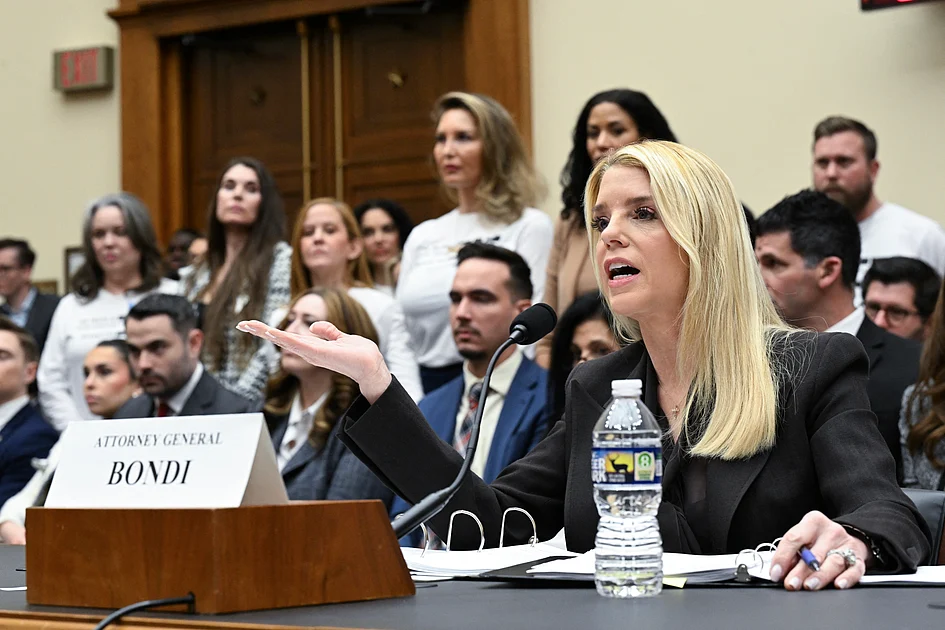
A contentious hearing before the House Judiciary Committee on Wednesday revealed deep fractures between US lawmakers and Attorney General Pam Bondi regarding the Justice Department’s handling of Jeffrey Epstein investigation documents. Republican Representative Thomas Massie of Kentucky leveled sharp accusations against Bondi, alleging deliberate concealment of powerful associates connected to the late financier and convicted sex offender.
The confrontation centered on apparent excessive redactions within recently released files. Massie specifically highlighted the case of billionaire Leslie Wexner, whose name appeared obscured in an FBI document listing potential co-conspirators in the Epstein sex trafficking investigation. The lawmaker characterized this as part of a “massive failure” to comply with legislation passed nearly unanimously by Congress in November, which mandated transparency with limited exemptions.
Bondi countered that Wexner’s name appeared numerous times in other released documents and claimed the Department unredacted his name within “40 minutes” of Massie identifying the issue. This prompted the representative’s retort: “Forty minutes of me catching you red-handed.”
The hearing grew increasingly heated as lawmakers from both parties expressed frustration with the volume of redacted and withheld material. Several Epstein victims observed the proceedings from the public gallery, adding gravity to the discussions about transparency versus privacy concerns.
The Justice Department released what it termed a final tranche of over 3 million pages of Epstein-related documents late last month, reigniting scrutiny of wealthy and influential individuals who maintained associations with Epstein following his conviction for soliciting prostitution from a minor.
Rather than addressing concerns directly, Bondi frequently responded with personal attacks against committee members, accusing Democrats of indifference toward crime victims in their districts and labeling the panel’s top Democrat a “washed-up lawyer”—an unusually partisan tone from the nation’s chief law enforcement officer.
Bondi defended the Department’s approach, noting that more than 500 Justice Department lawyers worked under compressed timelines to review extensive material. She maintained that any disclosure of victims’ identities was inadvertent and emphasized her career-long commitment to victim advocacy.
The Epstein files have presented an ongoing challenge throughout Bondi’s tenure as Attorney General. The Department’s initial decision last summer not to release additional material provoked strong reactions from various quarters, including some of former President Trump’s online supporters. This has drawn renewed attention to Trump’s past friendship with Epstein, who died by suicide in 2019 while awaiting trial on sex trafficking charges.
The hearing occurred against a backdrop of heightened political tensions, taking place just one day after a federal grand jury declined to indict six Democratic lawmakers over a video urging military personnel not to comply with unlawful orders.