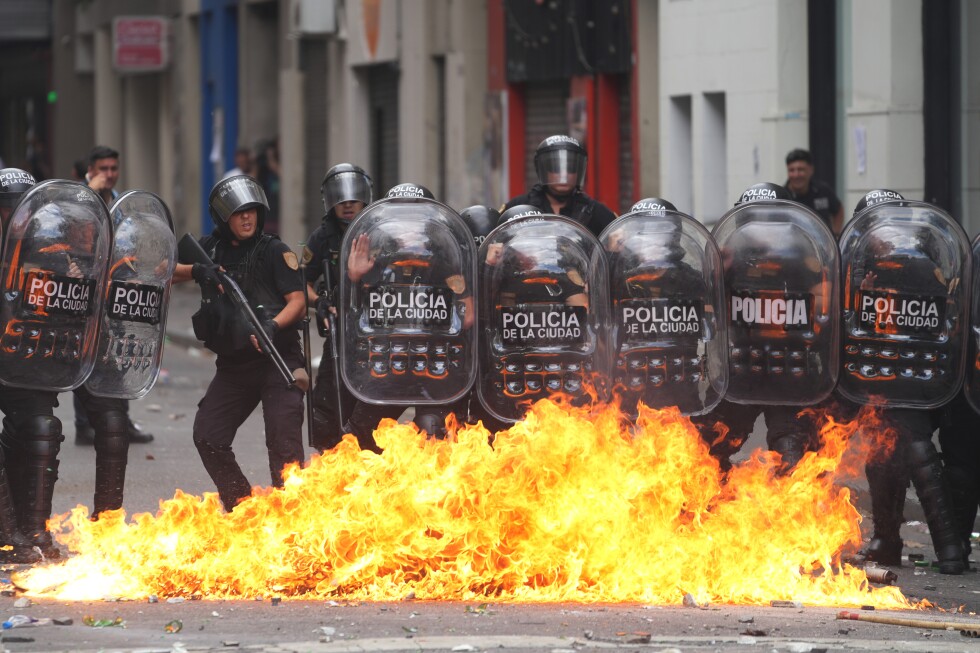
BUENOS AIRES, Argentina — Argentina’s capital witnessed intense confrontations on Wednesday as thousands of unionized workers mobilized against President Javier Milei’s proposed labor reforms, creating a volatile atmosphere outside the National Congress where senators engaged in heated debates over the controversial legislation.
The massive demonstration, organized by the country’s most influential trade unions, resulted in significant traffic disruptions and violent clashes with security forces. Police deployed water cannons and rubber bullets to disperse protesters who responded with petrol bombs, stones, and other projectiles. According to Security Minister Alejandra Monteoliva, two individuals were apprehended for assaulting police officers during the confrontations.
This dramatic showdown highlights the profound sensitivity surrounding workers’ rights in Argentina, a nation where Peronism—a populist movement that has consistently positioned itself as the defender of labor interests—has dominated political discourse since the 1940s.
Proponents of Milei’s labor modernization initiative attribute Argentina’s stagnant private sector job creation over the past two decades to excessively high payroll taxes, an overly complex severance payment system, and national wage agreements that restrict company-level negotiations. The proposed legislation seeks to introduce greater flexibility by limiting strike rights, extending employee trial periods, diminishing the influence of national trade federations in collective bargaining, and reducing severance compensation.
Business organizations contend these changes would stimulate critically needed foreign investment and promote formal employment in a country where approximately half of all workers operate in the informal economy without legal protections.
However, the reforms face vehement opposition from labor unions and their political allies, who argue the measures would dismantle essential worker protections developed over decades. The General Confederation of Labour, the nation’s largest trade union grouping that coordinated Wednesday’s protests, condemned the legislation as ‘austerity for the workers’ rather than genuine modernization.
The Senate deliberation was anticipated to continue through the night, with the legislation scheduled to advance to the lower house of Congress for further debate next month if approved.